

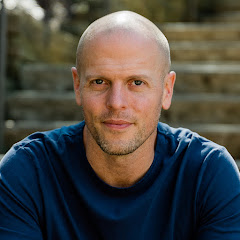
 Tim Ferriss
How to Spot 10-Year Trends and Build Billion-Dollar Companies — Kevin Ryan
Tim Ferriss
A Crazy Bio 0:00
Kevin Ryan's career runs from graduating Yale in 1985 and an MBA at INSEAD, through stints at Euro Disney and United Media, to helping launch DoubleClick, which sold for 1.1 billion dollars. He went on to found AlleyCorp and co-found Gilt Groupe, Business Insider, MongoDB, Zola, and Nomad Health, later co-founding a therapeutics company focused on psychiatric medicines and, most recently, closing a 335 million dollar second AlleyCorp fund aimed at very early stage deep tech companies.
Betting on Ten Year Trends 3:30
Ryan explains that building an important company takes about ten years, so you have to bet on a trend that will still be growing a decade out rather than chasing something already hyped. He lists trends he has bet on: internet advertising with DoubleClick, unstructured data with MongoDB, psychedelics for mental health, nuclear energy, the creator economy, and value based care, where hospitals share in the savings from lowering their own costs. He admits some trends, like longevity, he still hasn't found the right product for despite running a conference on it.
Events for Talent and Ideas 6:01
Ryan runs four recurring events, including Deep Tech New York, Digital Health New York, a longevity focused conference called DOC in Napa, and Odyssey, a purely intellectual gathering. He also organizes trips, including a group hike to Switzerland, an off piste skiing trip, and a twenty person trip to China to study what China does better. On these trips he seats people deliberately for the first two nights to force mixing, then leaves the last night open so people can reconnect with whoever they most want to talk to.
Spotting Second Order Opportunities 13:01
Ryan describes looking past the obvious winner of a trend to who supplies or works with that winner, comparing it to the people who sell shovels to data centers. He recalls that in 2003 he and colleagues noticed bandwidth costs were falling toward the point where video would become profitable, but they didn't act, and YouTube launched in 2005 to become a 300 billion dollar company. He closes by starting to describe Gilt Groupe, inspired by the French flash sale site Vente Privee, which brought discounted high end brand merchandise online and reached 175 million dollars in revenue in its second year.
Gilt Groupe Runs Into A Crowded Market 15:01
Kevin Ryan describes how Gilt Groupe hit 500 million dollars in revenue by year four, built on flash sales of designer overstock. The opportunity closed as brands like Marc Jacobs and department stores built their own websites, and rivals like Farfetch entered. The category became commoditized, and Gilt never grew large enough, unlike a competitor such as Theory with 20,000 unsold items versus Gilt's capacity to buy only a thousand.
Selling Gilt Before The Knife Falls 16:31
Ryan told his board the company was a falling knife rather than wait for further decline. Gilt sold for 250 million dollars to Saks, well below the earlier billion dollar valuation, though Saks later offered to sell it back for 5 million. Since then Ryan has avoided e-commerce, believing the delivery and returns problem is essentially solved, unlike fields such as cancer cures or nuclear energy where real gaps remain.
From Euro Disney To Discovering The Internet 18:32
Before Gilt, Ryan trained in finance at Yale, an investment corporation, investment banking, and Euro Disney operations, managing 15,000 hotel rooms and 50,000 daily staff. Wanting smaller scale, he became CFO and COO of a 180 person division of United Media. There he read about the internet in Business Week, then launched the Dilbert website in 1995, selling hard coded ads to IBM and building a successful side business, though his employer refused to fund an internet division, waiting for a nonexistent next internet.
Joining Doubleclick And Scaling Fast 22:00
Convinced the internet was inevitable, Ryan joined Doubleclick as its tenth or twelfth employee, rising from CFO to president to CEO by acting like a founder and making fast decisions. Doubleclick opened offices in 25 countries while competitors had six, winning clients like Microsoft and Procter and Gamble before its first country was even profitable. Doubleclick, he says, would be worth 100 billion dollars today as an independent company.
Building Companies The Alley Corp Way 24:00
At Alley Corp, Ryan and partner Dwight Merriman each invested roughly 500,000 dollars, spent about a year building and launching a product themselves, then raised outside venture funding, producing six companies including Gilt and Business Insider. Growth stayed narrow at first, Gilt began with one weekly clothing sale before expanding categories, and Business Insider started with three journalists covering New York tech before growing to 600 staff and full verticals like defense.
Building Business Insider from scratch 29:30
Kevin Ryan recalls hiring Henry Blodget, a talented but controversial writer, who bought into the idea within thirty minutes. The pitch was simple: no news site at the time was truly built for the web, since even the Wall Street Journal and Business Week did not update during the day. Business Insider pioneered things now considered standard, like posting multiple updates as a story develops, writing punchy headlines, and testing four different headlines for five minutes each to see which pulled better traffic. The strategy was to never spend on marketing and instead write content good enough to reach 100 million uniques, which people doubted but which eventually happened.
How he picks ideas to launch 31:31
With Dwight, and now running a firm of only 23 to 24 employees, Ryan says early decisions came from long, unstructured brainstorming sessions in a conference room, sometimes going months without a workable idea. He compares recognizing a good idea to knowing you have met the right romantic partner. He describes getting a business crush, where an idea keeps building in his mind for a couple of weeks, and if it sticks that long he generally moves forward without bothering to model the business, since the real question is whether the product itself is great. He prioritizes a strong product person over finance or marketing at the start, noting that getting the audience is far harder than later monetizing it through advertising.
Betting on nuclear before it was hot 34:31
Ryan's firm invested in Valar Atomics, a small modular nuclear reactor company, about three years ago at a twenty million dollar valuation, before nuclear was fashionable and while fusion companies were getting more attention. The idea came from his deep tech team's confidence in the founding team's execution, and Valar has since been valued at six billion dollars in a round from Sequoia. He credits the US government, including the Trump administration, for advancing both nuclear and psychedelics, and points to France's long, stable reliance on nuclear for most of its energy.
Fund strategy and returns 36:31
Ryan explains that his firm now sells about a third of its position in strong companies four or five years into a round, both to return money to the team and LPs and to hedge, even when they remain confident. His LP base is small and personal, roughly forty to fifty investors, mostly family offices and small endowments, with Ryan himself the largest. Across three funds, none has returned below fifty percent IRR, and the first fund is tracking near sixty percent. He deliberately avoids raising a huge fund to chase the standard two percent management fee business, preferring to stay focused on the twenty percent upside and the hands-on work of building companies in their first five years.
Impact beyond the money 39:31
Ryan points to Zola's wedding registry, an idea from twelve years ago, now used by roughly 150,000 to 200,000 couples a year, as an example of tangible impact. He mentions meeting New York's governor recently to discuss bringing nuclear energy to the state to lower energy costs and support data centers. He also hopes that within ten years, 100,000 people with PTSD will have been helped by methylone, a compound his group helped discover and is working to bring to market.
A serious ping pong hobby 40:30
Ryan traces his ping pong path from a table in his childhood basement to winning a high school tournament, then a regional one, before losing badly at the state level for lack of coaching. He later trained with Musa, a Nigerian player who placed fourteenth at the 1992 Olympics, and eventually talked his way into practicing with Yale's varsity team after joining the university's board. He still plays every two or three weeks, including with his 28-year-old son, and agrees with the idea that the sport's demand for hand-eye coordination and quick reaction is good for the brain.
Deliberate limits on time 42:15
Ryan recommends four to five weeks of vacation for people generally, but says he personally takes eight to ten weeks off a year while never being fully off the grid, preferring someone who works the other 47 weeks intensely. The habit traces back to building DoubleClick, which went public 24 months after starting, a pace he knew he could not sustain forever. He decided he could only fully commit to three things, family, staying in shape, and work, cutting nearly everything else, including cultural outings and watching sports, by about 80 percent. Once his kids left for college eight years ago, he found room to layer in new interests again.
A Deliberate Life Outside Work 44:01
Kevin describes structuring his time so he spends 8 to 10 weeks a year away from the office, still working daily but often only a few hours at a time. He gives an example of a week split between his house in France, where mornings are for biking, tennis, and swimming, followed by three hours of locked-in meetings at 9 to 12 New York time, sometimes stretching into a full night shift, and other days skiing before an afternoon of work and dinner.
Discovering Psychedelics Through a Book 44:30
At 54, Kevin read Michael Pollan's "How to Change Your Mind," a 2017 New York Times top-ten pick, and it changed his thinking entirely, since he had never considered psychedelics before. The book convinced him these medicines could help with PTSD, depression, and anxiety, and while still on Yale's board he discovered Yale's own strong academic work in the area, including researcher John Krystal's foundational studies on ketamine and depression. He became one of the larger donors to the Yale Center for Psychedelic Research, initially just out of conviction about a long-term trend rather than any plan to invest.
Building Transcend Around Methylone 46:30
In 2021, working with Yale professor Ben Kaminetzky and Blake Mandel from his Alley Corp team, Kevin moved from nonprofit support into building a for-profit company, reasoning that getting one compound through the FDA costs roughly 200 to 250 million dollars, far more than nonprofit donations could cover. They chose methylone, a lesser-known compound that can be taken weekly, unlike MDMA, which depletes serotonin faster and loses effect with frequent use. The company holds a 20-year patent covering PTSD, depression, and anxiety, though funding constraints during a difficult period for psychedelic investment meant they could only pursue one indication at a time, starting with PTSD.
Learning From the Industry's Early Mistakes 50:00
Kevin points to common errors other psychedelic companies made, especially assuming that a four to six hour treatment session could scale easily, when in practice it requires extra nurses and staff, driving costs out of reach. Another mistake was bundling psychedelics with psychotherapy, which FDA advisory committees struggled to evaluate since psychotherapy itself isn't standardized. He credits watching those failures, along with a more favorable regulatory signal from the Trump administration, with shaping how Transcend approached its own trials, which ended up 60 percent women since sexual assault, not combat, is the leading cause of PTSD.
Transcend as a Public Benefit Corporation 53:00
Transcend was set up so initial shareholders committed to give 10 percent of their gains to a foundation that Kevin and Blake will direct, amounting to about 20 million dollars distributed over the next 9 months to psychedelic-related causes. Kevin notes that public benefit corporation commitments are often unenforceable in practice, so following through matters to him personally, especially given how many wealthy people whose lives were changed by these substances have given little back to the science and ecosystem behind them, which he calls personally upsetting after putting 20 percent of his own net worth into the space.
Deciding Where the Money Goes 55:00
Rather than spreading the 20 million dollars across many small grants, Transcend plans to make around 20 larger grants, working with groups like the Psychedelic Science Funders Collaborative and aiming to become one of the largest donors in the industry over the next year. Kevin is less interested in funding pure academic research and more focused on lowering costs, noting that fewer than half a percent of people with depression or PTSD currently have access to these treatments. He is particularly interested in testing whether group therapy could work as well as, or better than, individual sessions, though the FDA remains cautious about how to monitor group settings.
Is Early Stage Venture Dead 59:00
A friend who left venture capital told Kevin Ryan that early stage venture is dead, meaning that consumer facing tech is no longer fertile ground, since someone can now clone Twitter in twelve hours using vibe coding, yet that still isn't enough to displace an incumbent. Ryan explains why his firm has shifted toward deep tech instead. He compares consumer products to one of a hundred and sixty four soft drinks, where standing out is unlikely, while solar, wind, geothermal, and nuclear energy are set to attract billions in contracts, and robotics is delivering tenfold and hundredfold improvements. His firm now organizes around three areas, AI, healthcare, and deep tech, with deep tech having grown the most over the past four or five years. He mentions an investment in a space company called Portal that helps reposition satellites, part of the wider ecosystem building around a coming tenfold increase in satellites.
Robotics and Unfilled Jobs 1:01:30
On robotics, Ryan expects the number of robots to grow by a factor of one hundred to ten thousand within a decade, with the clearest opportunities in narrow vertical uses like textile or car factories, since robots do best when they perform one task repeatedly. Restaurants remain much harder, because the work involves many different small tasks. He remains bullish on robotic massage, citing seventeen thousand unfilled massage jobs in the country and noting that about twenty five percent of people actually prefer a robot for comfort reasons. Customer support is another area moving fast, illustrated by an AI agent that detected a caller's discomfort in English and switched instantly to Spanish, resolving what had been a difficult medical conversation.
Two Very Different Company Outcomes 1:05:01
Ryan contrasts an uphill struggle, a "Shopify for healthcare" venture that consumed six million dollars and never found traction despite a clear repeating need, with MongoDB, which took a decade and three and a half years without revenue before becoming a thirty billion dollar company. He compares an unproven database to a pacemaker nobody wants to be first to try. On selling public shares, he says he holds as long as he believes in the growth, selling gradually over time rather than following a fixed rule.
A Billboard About Inequality 1:09:01
Asked what he would put on a billboard, Ryan says he wants a more balanced, caring society, worried less about startups than about worsening income inequality and diminished upward mobility. Fixing it, he says, requires addressing the budget deficit, taxing the wealthy more fairly, and improving access to education and retraining, since families who feel their children won't do better tend to drift toward extremes.
Immigration as the Real Lever 1:11:00
Ryan argues strongly for more immigration, saying the message that immigrants are bad is unfathomable given that Silicon Valley's wealth was built by immigrants. He wants the country welcoming PhDs in AI and computer science rather than turning them away, noting that immigrants from Haiti, Nigeria, and Kosovo consistently do well and calling for a million or two million more, comparing the ideal to the Premier League's openness to talent from Norway, Egypt, and Ghana regardless of origin.
New York's Booming Moment 1:14:02
Kevin Ryan describes New York as booming right now, buoyed by a strong summer with the Knicks, the World Cup, and the US Open, alongside thriving restaurants and startups, with immigrant founders behind top local tech companies like Datadog.
America Versus China, Broadly 1:14:59
He notes Austin remains a boom town too, but this New York season stands out. Zooming out, he says the US tech and business scene is thriving, and while China moves fast, America is competing strongly, watched with both concern and admiration worldwide.
Closing and Show Notes 1:15:31
The host thanks Kevin Ryan, points listeners to tim.blog/mpodcast for full show notes, and signs off encouraging everyone to be a bit kinder than necessary to others and themselves.
AI-generated summary. It can be wrong or incomplete - check anything that matters against the original.
