

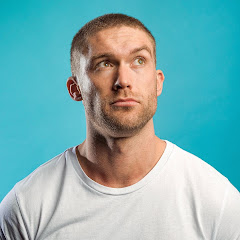
 Chris Williamson
Willpower Expert: The Secret To Effortless Discipline - Angela Duckworth
Chris Williamson
Revisiting Grit a Decade Later 0:00
Angela Duckworth wrote her well known book on grit ten years ago, arguing that consistency of effort over time is the common path to achieving excellence. Rereading it recently, she says she still stands by every word in it. But as a scientist she kept asking what else matters besides individual effort, and where passion and perseverance actually come from. That curiosity pushed her beyond the mind of a high achiever and toward their situation, meaning the people and surroundings around them, which became the subject of her new book.
When Trying Harder Stops Working 3:00
Duckworth explains that when effort is not paying off, the natural instinct, especially for someone who has succeeded through hard work, is to simply try harder, wake earlier, or stay later. She calls this reflex almost automatic, and admits that questioning whether the situation itself is wrong felt shameful to her, even cowardly, as if asking for help meant she could not do it alone. She argues the rule of thumb that effort is everything is not wrong, just incomplete, and treating it as complete can lead people to the wrong place.
Advice Hyperresponders and Their Trap 6:00
Chris Williamson and Duckworth discuss how people already inclined to work hard tend to over-respond to messages telling them to work even harder, a pattern Duckworth calls advice hyperresponders. The people most likely to read books like hers or listen to podcasts like this one are often already pushing themselves too far, so the advice reinforces an existing imbalance rather than correcting it. They compare this to physical therapy, where already-strong muscles get used even more while weaker ones stay neglected, and note the same pattern shows up with messages about confidence or assertiveness, where those who need it least take it furthest.
Thoughts, Situations, and Willpower 11:31
Duckworth says the personal development advice of the last ten to fifteen years mostly boils down to two messages, either just push through using willpower or change your thoughts so you want to do the thing. She argues both underestimate how much our thoughts are shaped by our immediate circumstances, such as who is nearby, what was just said, or whether a drink is within arm's reach. Highly successful people, she says, are not actually relying on willpower at all. Instead they arrange their lives so willpower becomes unnecessary, much like a strategist who wins without brute force. Her own example is laying out gym clothes the night before, since even the tiny friction of opening a drawer can be enough to stop her from exercising, while a visible cue in front of her makes going almost automatic.
The Power of Situations Over Character 14:30
Angela Duckworth describes a three box model of behavior, where the situation shapes your thoughts, which then shape your response. She points to a graduate school classic, The Person and the Situation by Dick Nisbett and Lee Ross, which argues that people feel intentional and goal directed but are actually far more reactive to circumstances than they realize. She cites the famous Good Samaritan study, where seminary students training for the ministry were far less likely to stop and help a suffering stranger if they had just been told they were late for an appointment, even though lateness should have nothing to do with their character. The lesson she draws is that agency is not only internal; people also have agency over the circumstances they place themselves in, such as choosing to keep water nearby instead of soda, and that kind of situational agency tends to reinforce itself over time.
Michael Phelps and His Situation 19:04
Duckworth uses Michael Phelps as a case study in how grit is necessary but never sufficient. Phelps trained harder and visualized more thoroughly than almost anyone, yet his success also depended on being born near Bob Bowman, regarded as the greatest swimming coach in history, and later moving ten minutes from him when his sisters joined the North Baltimore Aquatic Center, a club that recruited top coaches and elite young swimmers. His mother also mattered, recognizing that although his ADHD made him disruptive in school, the right setting could channel him into complete focus. When Bowman later moved, Phelps chose to follow him, showing that even his situational choices were part of his achievement, and Duckworth concludes that behind every example of grit there is usually a situation acting as an ally.
Why Groups Beat Going It Alone 25:30
When Duckworth asks Americans how to control behavior, most say the best method is to control the situation, yet when asked what they actually do, they say they rely on willpower, often because they don't want to feel their success depended on a crutch. She argues the less obvious insight is that people reach individual goals more often when they pursue them alongside others chasing similar goals, even if those others aren't working on the same project. She contrasts this with the now dominant do it yourself mindset, noting that the phrase DIY, introduced over fifty years ago, is fifty times more common today, while young people rarely think to seek out a tribe for personal goals the way a swimmer naturally joins a team. As an example, she mentions a group of young orthopedic surgeons who met at a conference and bonded over the all-consuming nature of their training.
A Surgeons' Group Text as Lifeline 29:00
Duckworth describes a group of orthopedic surgeons who, despite becoming chaired professors at top hospitals, wanted another kind of success too: being good fathers and husbands. Strangers at first, living in different cities, they started having dinner at conferences, then formed a group text thread, and eventually met with increasing frequency. Looking back from retirement age, each of them says the road not taken was the better one, and the group saw them through tragedies and personal struggles. Duckworth admits she has collaborators and a lab team but lacks this kind of peer group, and compares it to creating Alcoholics Anonymous for yourself, a mutual aid society for shared professional and personal challenges.
Finding or Starting Your Own Group 34:00
Duckworth says she is now trying to start such a group herself, reaching out to accomplished women in their late forties to fifties. Her advice is to join an existing group if you can, the way a marathon runner joins a local running club, but if none exists, you may need to start one. She distinguishes mentors from peers: a mentor is further along and usually older, while a peer is at the same stage of life and similarly minded. Giving advice to peers, she notes, reveals things about yourself to yourself, which she ties to the AA idea that you only keep it when you give it away. She mentions a study where students randomly assigned to give advice on procrastination saw their own grades improve, even though they thought they were only helping others.
The Isolation Epidemic in America 35:30
Duckworth points to data showing Americans are spending more time alone, more than an hour less time outside the house than twenty years ago, and about 300 fewer words spoken per day. She cites survey statistics from Andrew Yang: time spent hosting or attending social events fell 50 percent between 2003 and 2024, young people aged 15 to 24 spent 70 percent less time at parties in 2024 than the year before, men who watch television do so seven hours for every one hour spent with another person, and the average female pet owner spends more time with her pet than with all humans combined. She argues the default settings of modern life are not good and that relationships deserve more deliberate attention, especially since changing your situation is one of the most reliable ways to change yourself.
Becoming a Mentor Magnet 39:30
Shifting to mentors, Duckworth says the real question is not whether mentors matter but how to become a mentor magnet, someone accomplished people want to mentor. She illustrates this with Cody Coleman, who emailed her in 2013 after watching her TED talk. Born in a prison outside Trenton, raised amid chaos and severe asthma, he eventually graduated from MIT. His email showed curiosity, clear preparation, and a sincere offer to help in any way he could, and of all the messages in her inbox that day, hers was the one she answered.
Cody Coleman and exponential growth 43:00
Cody Coleman's path went from MIT to Google to a Stanford computer science PhD, making him the third Black recipient of that degree in the university's history, and he is now CEO of an AI startup valued by Forbes at potentially a billion dollars. In his own talk, he showed a graph contrasting a gently rising gray line, what people assume his life looked like, with a red exponential curve, what his life actually looked like. He explained that in five year chapters his situation kept improving, and that opportunities and support multiplied together, producing exponential rather than linear growth, an example of the Matthew effect where good begets better.
Becoming a mentor magnet 44:30
Cody never emailed asking to be mentored outright. Instead he asked for a short conversation, offered to be helpful, and expressed gratitude, which led to more conversations and eventually a shared project, in his case a video about overcoming humble beginnings through passion and perseverance that took about three months to make, turning him into what she calls a mentor for a season. His PhD dissertation acknowledgements ran three single spaced pages thanking over two hundred people by name, including seventeen Stanford administrators, showing someone who is gritty, a mentor magnet, and skilled at navigating into better situations all at once.
Defining burnout 46:31
Burnout, a term coined by psychologist Christina Maslach, is distinct from depression and specifically tied to work. It has three parts: exhaustion, a strange dissociation or lack of presence, and a feeling of helplessness, where effort stops producing results.
Writing this book caused burnout 47:30
While writing the book, she experienced all three symptoms herself, working seven days a week from before dawn to after midnight, isolated at home in a self-imposed extension of pandemic lockdown even after everyone else returned to normal life. She kept trying harder instead of changing her situation, waking at 11:30 after falling asleep at 10:30 and staying awake the rest of the night, and fantasized about quitting to become a pastry chef despite not even eating pastry.
Asking for help too late 50:30
A friend named Julie noticed her stress and tried to get her to take a walk or go skiing, but she refused, feeling she could not spare the time. Eventually she connected with a retired editor named Rick Kot, who met with her weekly even when she showed up with no pages written. He eventually identified that the book's structure, not its content, was the real problem, and reworking it changed everything, though she regrets not asking for this kind of support three years earlier.
Fixing the situation, not the person 53:00
Drawing on Maslach's later work, she explains that burnout usually stems from a mismatch between a person and their work situation rather than a flaw in the person. Workload is only one possible mismatch; others include lack of autonomy, misaligned values, and an unfair system. The prescription is to change the situation itself, whether by a leader adjusting conditions for others or an employee identifying and addressing the specific mismatch, since no amount of willpower or positive thinking can undo burnout on its own. She emphasizes that burnout is a temporary emotional state, not a fixed trait, and that she herself moved through it rather than remaining defined by it.
A mysterious energy collapse 57:30
The guest describes a mold-related illness he developed while living in a house with water damage, something he traces partly to American wood-frame construction trapping moisture and microbes. The first sign was a crushing drop in energy, feeling like gravity had quadrupled by early evening despite being a former night-owl club promoter. He slept ten to twelve hours yet woke more exhausted than before, became unable to tolerate loud or percussive sounds, lost interest in both conversation and silence, and withdrew from friends, all without realizing he was actually sick.
Working harder made it worse 1:03:01
His instinct, honed over a lifetime, was to treat the problem like every other problem and simply push harder, but this time pushing harder made everything worse. He suffered severe brain fog, forgetting names of old friends, streets, and cities, even forgetting how to tie his shoes, while ordinary smells like cut grass or standing water became unbearable. He chased a string of diagnoses, including COVID, long COVID, Epstein-Barr, BPA exposure, and allergies, calling it a Sherlock Holmes hunt through dead ends, and found his sleep and cortisol rhythms fully inverted, alert at night and wiped out by day. Recovery has been slow over two and a half years, and he connects it to burnout, since the very mental capacity he relied on to solve problems was the thing being attacked, leaving him feeling hopeless and stripped of agency, a state he compares to a friend's father who said his illness had taken even himself.
Relearning grit, then alignment 1:05:01
Having learned to be gentle with himself and lower his standards to recover, he found his discipline slackened everywhere, gaining twelve pounds and dropping workouts, meditation, and reading, so he now has to consciously relearn hard effort he thought he'd mastered fifteen years earlier. Angela pushes back gently on the idea of grit as simply forcing yourself, noting that even Michael Phelps never just white-knuckled his way through swimming, and that real self-talk sounds more like I can do it and I know what to try next. She frames this as alignment, a concept from Stanford's James Gross, where internal arrows, interest, importance, ability, and a clear next step, all point the same direction, and external arrows, like peers, mentors, and physical space, line up too, echoing Aristotle's idea of the good life. The conversation closes on concrete environmental habits, including the guest pasting memorized quotes like Nelson Mandela's I never lose, I win or I learn on Post-it notes at eye level, mirroring techniques he observed in people he studies, since what surrounds you shapes what fills your head.
Making hard things easier, not easier things 1:12:33
Duckworth argues that removing all friction from life would produce weak character, since growth, like a muscle tearing and repairing, requires resistance. But the goal is not to eliminate hard work, it is to make hard work easier to sustain. She points to triathlete Alistair Brownlee, who trained with legendary dedication yet deliberately bought a house near his swimming and running routes and kept his training clothes clean and ready, just as Duckworth lays out her own gym clothes. Surrounding yourself with a great coach, supportive peers, and the right physical setup does not remove the hard work, it just makes doing it more likely.
Editing the mentor out of the story 1:15:00
Chris observes that stories which show a hero surrounded by help make for bad movies, since drama depends on visible friction, so culture tends to edit out the support system and present only the solitary hero. Duckworth tests this against her own daughter's story, in which the girl struggled in an advanced math class, and her father worked through the math with her, the teacher gave her a second chance at a test, and the household quietly protected her time and space. An early reader of the manuscript still called it simply a story of grit, missing all the scaffolding that made the achievement possible. Duckworth's point is that you cannot be Michael Phelps without Bob Bowman, and real excellence always rests on an unseen support system.
Why environment feels less like you 1:19:31
Chris suggests people resist crediting environment because they treat things like speaking voice as core to identity, while skills like playing the saxophone feel more separable, so improving speech can feel like a threat to selfhood in a way instrument lessons do not. Duckworth agrees this instinct is mistaken and uses a hundred-point framework, noting that giving credit to mentors, peers, or circumstances can feel like it shrinks your own share. She cites Roger Federer's Hall of Fame speech, in which his most repeated word was ecosystem, naming his stringers, physiotherapist, coaches, and agent by name. The real choice, she says, is whether you keep all hundred points for a smaller achievement or share credit and reach something far bigger, since you can own all of a small pie or a slice of a much larger one.
Working harder versus changing circumstances 1:24:30
Asked how to know whether to push harder on yourself or change your situation, Duckworth says both answers tend to lead back to changing circumstances. If you feel burned out or helpless, that exhaustion is a warning sign, like a canary in a coal mine, telling you that you need more support or an adjusted level of challenge rather than more raw effort.
Sustaining Effort Through Thought, Not Force 1:25:32
If you want to work at a higher level, say seventy-five percent instead of coasting, you need a thought that sustains it, something like believing your work is interesting, important, and that you know what to try next. Willpower alone can get you through a single tough moment, like one hard afternoon, but it cannot carry you through something you must repeat every day, every week, every year. Since humans are already better than animals at delaying gratification and forcing themselves through unpleasant tasks in the short term, the real challenge is not a single act of willpower but consistency, and consistency comes from a situation built to produce it.
Tall Poppy Syndrome 1:28:01
The conversation turns to tall poppy syndrome, a British and originally Australian and New Zealand habit of tearing down anyone who becomes conspicuously successful or high status. Success is tolerated only if you treat it as an embarrassing accident, apologizing for your own achievements rather than owning them. This is contrasted with an American tendency toward overstatement, summed up in a friend's line that the British affliction is cynicism and the American affliction is bullshit.
Culture, Status Quo Bias, and Moving 1:33:00
A culture of excellence is one where constantly striving to do better is simply the norm, the way Michael Phelps's success came partly from Bob Bowman building an environment where high achievement was expected, which is the exact opposite of tall poppy culture. Economist Steven Levitt's coin-flip experiment on status quo bias found that of all major life decisions, changing where you live is the one people are most reluctant to act on, even when they know they should. The Economist magazine's research likewise found that moving to a neighborhood with greater opportunity is the single most effective life change available, yet it is the one people resist most. One guest describes deliberately moving from the UK to the US, feeling more at home despite initial terror, and both speakers note how constant migration into cities like Austin prevents social hierarchies from calcifying, unlike settings where the same people stay together for years and bullying or stratification take hold.
Studying AI and Behavior 1:39:32
Angela Duckworth explains that as a behavioral scientist, she sees the current changes from phones, social media, and AI as more significant than almost anything else affecting how people spend time, socialize, exercise, and practice religion. She plans to study this shift rather than write a book about it, feeling she has already covered both the inside game and outside game of success.
Closing and Book Details 1:40:30
Duckworth admits she is not skilled at self-promotion, but gives her website, angeladuckworth.com, and names her book, titled Situated, which is available everywhere.
Subscribe Reminder 1:41:02
The host closes with a reminder that YouTube sometimes unsubscribes viewers without their knowledge, asking listeners to check and tap the subscribe button to support the show and help secure bigger guests.
AI-generated summary. It can be wrong or incomplete - check anything that matters against the original.
