

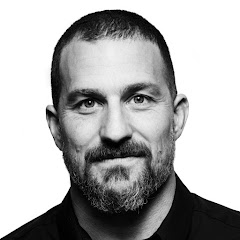
 Andrew Huberman
Unlocking Persistent Motivation & Extreme Resilience | Ross Edgley
Andrew Huberman
Sisyphus and struggle 0:00
Sisyphus is held up as the figure who can outsmart the gods one last time by smiling at the task. The point is that the struggle itself can be enough to fill a person’s heart. That idea becomes a way of thinking about hard training and about Ross Edgley’s own work, where the boulder may never move, but the effort still gives shape and meaning to what you do.
Motivation and hard things 1:00
Ross Edgely is introduced through his endurance feats: swimming around Great Britain, crossing the Yukon River for 56 hours, pulling a full-size car in a marathon, and running 30 marathons in 30 days. He says his drive has changed over time. As a child, he wanted more challenge and hid rocks in his backpack on hikes. Later, some goals were ego driven, but others, like a swim tied to ocean conservation and biodiversity sampling around Iceland, felt more worth doing.
Doing it because you said 16:01
Doing it because you said you would is the first motive he names. He points to Iceland and the Great British Swim, where he had told sponsors, his team, and himself that he would finish. Records mattered less than keeping the promise. His brother Scott kept reducing the question to the simple fact that the swim would mean nothing if he stopped before the end. Self-respect came from looking in the mirror and knowing he had not quit.
Shame and team pressure 21:00
Fear of shame is the next force he names. In Iceland he still had 100 miles left when his first child was due in a week, a hurricane was moving in, a volcano was sending out poisonous gas, and glacier ice was filling the route. He pushed on because he did not want to disappoint his partner or miss welcoming his son. He also keeps saying we, because tides, weather, currents, and river hazards make these swims team efforts.
Myth and mental framing 29:01
[29:01] Ross describes swimming around Iceland with the local stories of the bull, eagle, dragon, and giant in mind. He turns those place stories into a private script. He also uses the Norse tale of Odin, who knows he will die but still goes into battle. That mindset helps him keep going and finish for his son and for the act of trying the impossible.
Brain circuits and limits 32:01
[32:01] The discussion then shifts to the brain. The tube test in mice shows that activity in a prefrontal area can push persistence and winning, while reduced activity can make a winner lose. In humans, the same kind of top-down control helps with strategy, and energy matters too. Ross says he now outsources common sense to his team because he knows he will keep swimming until he lands in hospital.
Purpose and home life 43:30
Purpose is the thing that keeps him moving. He quotes Viktor Frankl and Jordan Peterson, and says he needs something to train for. Without that, his girlfriend says he is like a caged animal. She knew him before the big swims, so his strange habits were never a surprise. Even when he comes home bruised, chafed, and covered in wounds, she still says he is happiest when he is out there.
Reading danger correctly 46:31
The Yukon swim and shark dives change how he reads risk. He says black bears felt skittish, but brown bears felt like a real threat, so he checked with the crew and kept going. He and the neuroscientist discuss how animals decide whether you are moving toward them, still, or retreating. The same simple choices shape human fear too. Sometimes the safest move is to go forward, and sometimes it is to stop or quit.
Fuel and self-talk 57:31
The discussion turns to the different ways motivation can be lit. One version is blunt defiance, the feeling of “you said I couldn’t,” and another is anger at the body itself, as in telling a failing shoulder, “you’re coming with me” on an Arctic swim. That anger still has force when a person is pushing through pain. The point is that motivation can shift from one source to another, depending on what keeps the pedal down when effort starts to fade.
Us and what is ours 59:30
The stronger and more lasting fuel is tied to what feels like “us.” A son seen on a scan, a wife, a child you adopt, or a parent you lost can all trigger a deep pull to keep going. The body seems wired to separate self from not-self, through old brain circuits such as the hypothalamus, which simply signals forward, stop, or retreat. That same switch shows up in animals, in family ties, in teams, and in the drive to protect your own young.
Money and family 1:12:01
Money is treated as a tool, not a dirty word. It can help you serve your family and do more for other people. The real danger is becoming so driven that you miss the things that matter at home. That regret can last a lifetime. Making money for honest work is not shameful. It can also give you room to support the wider world, not just yourself.
Frustration as fuel 1:15:01
A line runs through the discussion between dark energy and light energy. Mild anger, frustration, and a sense of us versus them can drive people hard. A brain study is used to show this. People often prefer the circuits linked to frustration over more pleasant ones because they feel motivating. The same pattern appears in hard work, sport, science, and self-discipline.
Lowering the stakes 1:26:30
When effort becomes overcontrolled, too many signals crowd the system and precision falls apart. In long swims, Ross says the answer is often to care less in the moment. He stops checking his watch, asks the crew not to report his pace, and tells himself to enjoy the water. The point is not to quit caring. It is to lower the stakes in your head until technique can settle again.
Trusting the dark hours 1:29:01
He says motivation follows sleep, daylight, and circadian rhythm. During the Iceland swim, 24-hour daylight, 6-hour shifts, storms, and poor rest made him distrust his own mind. Between 2 and 5 a.m., he does not believe his thoughts. In those hours he can feel pointless, angry, or defeated, and he treats that as a condition, not a truth. Later, when sleep returns, the same situation feels manageable again.
Pain and stress carry over 1:40:30
Pain, cold water, and other high-arousal stressors all trigger the same body chemistry: adrenaline, norepinephrine, dopamine, and sometimes cortisol. The question is whether your mind can use one hard experience to handle another. Deliberate cold exposure can help because you learn that the first rush is brief, your breathing can settle, and panic only adds more adrenaline. That is stress inoculation, but it works best when the exposure is safe and controlled.
Training the chassis 1:46:02
His own training leans hard on strength work because endurance events can fail at the tendons, ligaments, or other parts of the chassis before technique or lactic threshold matters. He sees strength training as general physical preparedness, not just bigger muscles. You need to train the body so it can later survive higher volume and intensity. In hard effort, the goal is often simple: put one arm in front of the other and keep the chain intact.
Shifting visual focus 1:54:31
Vision can change how much energy you can recruit. A narrow gaze, like the cyclops idea or tunnel vision, pushes arousal up and can help you act in a hard moment. A wider gaze lowers that drive and lets you take in more. During the Yukon swim, Ross said he moved between those states, enjoying the view at times and, at night, staring at the river bottom and using only peripheral sight to keep going.
Tools for focus and recovery 2:01:02
He linked this to animals and to training. Cuttlefish and sharks can switch into a locked-on hunting mode, and he wants to experiment with that in swimming. The talk then turned to supplements. Caffeine was the main everyday tool. Nicotine felt too fast and habit-forming. Alpha GPC, creatine, and other aids were treated as occasional tools, not replacements for sleep, food, training, sunlight, and good behavior.
Hormones and suspicion 2:08:00
He says supplements can help, but he is wary of people starting exogenous hormones without a clinical need. He did not use them until 45, then tried a true micro dose with hCG to protect fertility, and found lower doses work best. He also notes that his muscular build makes people assume gear, and he wants the point judged against his blood work and his long training history.
Strength behind the swimmer 2:09:30
He explains his physique through an odd sporting path. He grew up swimming early, was told he would not grow much, and moved into water polo, where he could be more physical. He has lifted since 13, trained with strongmen like Tom and Eddie Hall, and returned to swimming after years of strength and hypertrophy work. That history, he says, explains why he looks unlike a typical swimmer.
Simple motivation 2:22:00
Life on the boat feels stripped down to tide and breakfast, with no mortgage, taxes, or email to manage. That simplicity lowers stress and leaves room for a few clear motives: doing what you said you would, doing it for others, doing it out of love, and even doing it because other people cannot. Gratitude sits under that last one. If you can do the work, you will do it.
Resilience through struggle 2:24:31
His father, a tennis coach with stage four melanoma, kept coaching in a wheelchair after doctors said he could not stay on court. Larry did something similar on the Yukon, sailing with weeks to live and cheering from the boat until the swim ended. Those stories lead to his view of resilience: the struggle itself matters, like Sisyphus smiling while rolling the stone. He also uses a smile, gentler self-talk, and some "fuck you" energy when needed.
Next swims and closing 2:40:01
Ross Edgely says he is already lining up more swims tied to ocean conservation and fundraising, and he jokes that he acts like a hired mercenary for a good cause. He rejects a swim down the Amazon because of dangerous parasites, then says he will keep taking on new challenges when the call comes. The conversation ends with praise, a plug for his book, and the host’s usual requests to subscribe, follow, review, and use the newsletter.
AI-generated summary. It can be wrong or incomplete - check anything that matters against the original.
