

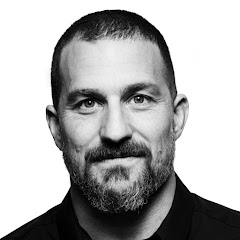
 Andrew Huberman
Tools to Improve Your Focus & Concentration | Huberman Lab Essentials
Andrew Huberman
Introduction to Focus Tools 0:00
Andrew Huberman opens this episode of Huberman Lab Essentials on focus and concentration, promising science-based tools drawn from peer-reviewed research. He references Dr. Wendy Suzuki's NYU lab, which found that a 13-minute daily meditation practiced for 8 weeks significantly improved focus and concentration, though the full 8 weeks wasn't necessary to see benefits. He notes he will describe that protocol along with a shorter alternative for people with only 3 to 5 minutes to spare, since this episode focuses on practical tools rather than deep mechanisms.
The Arrow Model of Focus 1:30
Huberman offers a mental image to explain how focus works: an arrow with a shaft and a head. The shaft represents epinephrine, also called adrenaline, released from the locus coeruleus in the brain and from the adrenal glands in the body. Epinephrine increases energy and alertness but does not by itself create focus, making it necessary but not sufficient. The arrowhead represents acetylcholine, which acts like a spotlight, narrowing attention onto specific neurons, with a tighter arrowhead meaning sharper focus. A third chemical, dopamine, the molecule of motivation rather than just pleasure, sustains focus over time, allowing concentration to narrow progressively within a single session and be repeated on demand.
Sleep as the Foundation 4:02
Huberman stresses that optimizing sleep is one of the most important tools for building focus, aiming for quality sleep about 80 percent of nights since no one achieves it every single night. Sleep affects nearly every brain and body process, including cognitive and physical performance and hormone output.
Sound Tools and Warming Up 5:01
He points to peer-reviewed studies showing white noise, and to a lesser extent pink and brown noise, help people transition into focus by amplifying activity in the prefrontal cortex, the brain region behind the forehead responsible for directing attention. He compares this transition to warming up before a run or lifting weights, arguing nobody should expect to drop instantly into deep focus. Focus moves gradually from shallow to deep, like sleep stages, and understanding this dynamic process relieves pressure to feel focused immediately. Repeated practice strengthens these circuits through neuroplasticity, the nervous system's ability to change with experience.
Ultradian Cycles for Focus Sessions 7:31
Huberman explains that the brain and body operate on 90-minute ultradian cycles, so he recommends structuring focus sessions around this duration, including the first 5 to 10 minutes as a warm-up. How many such cycles a person can complete in a day depends on sleep quality, nutrition, and how well-trained their focus capacity is. He emphasizes these are intense, deliberate bouts of mental effort, comparable to a workout.
Blood Glucose and Mental Clarity 9:00
Citing a study published in Neuron, Huberman explains that neurons represent the environment more precisely when there is sufficient glucose in the brain, meaning low blood glucose from fasting impairs clear thinking. Yet some people report feeling mentally clear while fasted; he attributes this to avoiding the parasympathetic, rest-and-digest shift that occurs after eating, especially after a large meal, which diverts blood to the gut and induces sleepiness. He describes a U-shaped relationship: being fasted sharpens focus, a full belly reduces it, but having adequate or elevated blood glucose without overeating boosts cognitive function. Huberman shares his own routine of doing one 90-minute focus bout fasted around midday, eating lunch without overeating, then doing a second focus bout in the afternoon.
Caffeine and Timing 12:00
He notes caffeine between 100 and 400 milligrams can aid focus, but warns that people prone to anxiety or panic attacks should avoid jumping to 400 milligrams, since that dose can cause sweating, elevated heart rate, and panic. Most people do well with 100 to 200 milligrams before focused work. He also cautions that caffeine consumed in the evening disrupts sleep architecture and depth even if one can still fall asleep, recommending cutting off intake at least eight hours before bed, ideally 10 to 12 hours.
Stress Can Sharpen Concentration 13:00
Huberman cites a 2020 study in the Journal of Experimental Psychology by lead author DeGroot, titled "Acute Stress Improves Concentration Performance," which found that sudden stress, through the release of adrenaline, narrows the visual field into tunnel-like focus and actually improves concentration performance, countering the common belief that stress only impairs focus.
Stress Hormones Boost Concentration 14:30
A study measuring cortisol, anxiety, and concentration found that mild stress more than doubled performance on focus tasks. Researchers induced this stress with a standard lab protocol, a simulated job interview followed by an arithmetic task while being evaluated. This was not traumatic or intense stress, just enough to modestly raise epinephrine and cortisol, and that small increase meaningfully sharpened participants' focus and concentration.
Cold Exposure For Focus 15:30
Deliberate cold exposure, such as a one to five minute cold shower, is a safe, reliable way to raise epinephrine and dopamine for better focus. A study in the European Journal of Physiology found dopamine levels nearly doubled and stayed elevated for hours after cold exposure. Epinephrine narrows attention into a tunnel-like focus, making you less distractible, and cold water should feel uncomfortably cold but remain safe to tolerate for one to five minutes.
The 13 Minute Meditation 18:01
Wendy Suzuki's lab found that a daily 13-minute meditation, done for eight weeks, improved focus, mood, sleep, memory, and reduced stress. The practice involves sitting with eyes closed, breathing through the nose, and concentrating attention about an inch inside the forehead. Attention will drift every few seconds, and that is normal. The real training happens through repeatedly noticing the drift and refocusing, which builds the neural circuits, including the prefrontal cortex, infratemporal cortex, and hippocampus, responsible for sustained attention.
Visual Focus Training 22:30
Schools in China and elsewhere use a visual exercise where people stare at one fixed point for thirty seconds up to three minutes, refocusing whenever their gaze drifts, engaging the prefrontal cortex and frontal eye fields. Starting with thirty seconds and gradually adding five seconds daily builds this skill. This can serve as a warm-up before work or exercise, and as a reset during a 90-minute focus session instead of checking a phone.
Omega-3s And Creatine 27:01
Taking one to three grams of EPA omega-3 fatty acids daily supports mood, brain function, and concentration. Creatine monohydrate, often known for muscle performance, also fuels neurons and supports prefrontal cortex function tied to focus; five grams daily is a standard effective dose for this cognitive benefit.
Boosting Acetylcholine With Alpha GPC 29:02
Acetylcholine is a brain chemical that sharpens the attentional spotlight and supports neuroplasticity by increasing focus directly. Choline-rich foods feed into this system, but a supplement called alpha GPC acts more acutely, and taking 300 to 600 milligrams before a workout or work session has been the most effective tool in personal experience, backed by some human data. A study linking long term alpha GPC use to stroke risk through a marker called TMAO prompted caution, so a 600 milligram garlic capsule is taken alongside alpha GPC, which is used about four days a week, as a way to offset that TMAO increase.
Stacking Tyrosine, Alpha GPC, and Coffee 31:02
To raise dopamine for concentration, the amino acid L-tyrosine is useful, and a typical stack is 500 milligrams of L-tyrosine, 300 milligrams of alpha GPC, and a cup of coffee, taken early in the day before exercise or focused mental work. No more than two or three tools are combined at once, and on days with good sleep or strong enthusiasm, no supplements are needed at all, since these are meant as an on-ramp into deeper focus rather than a permanent requirement.
Where Prescription Stimulants Fit In 35:30
Prescription drugs for ADHD, including Adderall, Ritalin, Vyvanse, and modafinil, raise dopamine and epinephrine and can genuinely help people with clinically diagnosed ADHD by teaching attention circuits to engage, often letting dosage drop over time as those circuits learn on their own. Taking such drugs without a prescription is both illegal and risky. The recommended order is behavioral tools first, then nutrition and sleep, then supplements, and prescription medication only if those steps fall short. Daily deliberate defocusing, like daydreaming or walking without a phone, is also encouraged as a way to make the next bout of focus work better.
AI-generated summary. It can be wrong or incomplete - check anything that matters against the original.
