

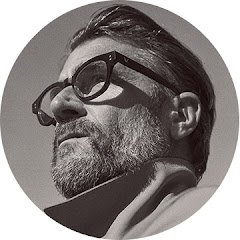
 Rich Roll
The Mindset Behind 50 Marathons in 24 Days | William Goodge
Rich Roll
A New Extreme Challenge Announced 0:00
William Goodge reveals his plan to run 50 marathons in 50 states in 24 days, starting October 9th, a compression of the format popularized by Dean Karnazes, who ran the same feat over 50 days. Goodge explains that his original idea was to attempt it in 20 days, but working with his logistics partner Goodwin, he built in a four-day buffer to account for anything going wrong, since the plan relies heavily on driving, commercial flights, and private planes. On most days he will run two marathons in two different states, but on four occasions, October 17th, 19th, 25th, and 30th, he will run three marathons in three separate states within a 24-hour period, each one needing to come in under five hours. The journey is designed to end at the New York City Marathon, mirroring how he once finished a UK challenge, 48 marathons in 30 days, at the London Marathon.
Routes Built Around Real Cities 5:00
Rather than landing near remote airstrips, the team has designed the route to pass through recognizable, accessible places so that members of the public can join him for a three mile loop in every state before he and his crew continue on. Examples include running along Santa Monica Beach for California, Miami Beach for Florida, Dallas for Texas, and a stretch past Mount Rushmore in South Dakota, with the journey starting in Honolulu, Hawaii, and moving eastward to New York. The map includes roughly five or six commercial flights, three private jet flights, and 49 transfers, with some illogical-looking detours, like doubling back from Ohio to Arizona, that are actually necessary to make the whole logistical puzzle work. One fixed commitment is a stop in Las Vegas timed to the biggest private aviation conference in the US, where he plans to run through the convention center itself.
The Team Making It Happen 6:30
About 50 people are involved across all partners, including GoFundMe, Stand Up to Cancer, and roughly 50 employees at Goodwin who have worked on the logistics. His personal crew includes longtime friend Robbie Ballinger, who will run the first half before overlapping with Jason, a former Marine who supported him across Australia, in Chicago, and Peter John, a former paratrooper. Goodge notes that having military-minded people around is valuable because they stay calm when unplanned problems arise, which he expects will happen often given the reliance on commercial aviation.
Sponsors and Merchandise 8:00
The challenge is backed by Goodwin as the main partner, along with Whoop, which he has worn since before Covid, Hydration company Skratch, and his own sunglasses brand, Riskier is producing a tour-style merchandise line similar to a band's concert tour, with a unique t-shirt for every state, and ten dollars from each sale going to Stand Up to Cancer.
Running as Grief and Tribute 11:30
Goodge traces his running back to the Christmas after his mother died, when he ran a marathon to raise money for Macmillan Cancer Support, the charity that had helped his family, and raised twenty thousand pounds, which led him eight months later to run the length of the UK from John O'Groats to Land's End. He describes his mother as the least likely person in the family to get cancer, since she barely drank, never smoked, was a nurse, and ate well, while his father enjoyed pints, and she still had to fight the disease three times before it took her life. That unfairness left him with deep anger, and he chose to channel it into something constructive rather than let it destroy him, since doing so would have dishonored the way she raised him. Every year on her birthday he runs the number of miles she would have turned, having covered 62 miles most recently, treating the run as time spent reflecting on her love of gardening and the outdoors, and raising further donations for Stand Up to Cancer along the way.
Turning the Run Into a Movement 17:30
For this challenge Goodge is partnering directly with Stand Up to Cancer, a leading research and support organization, and plans to build a gamified website with leaderboards for top-donating states, top individual fundraisers, and challenges like running every day for 24 days or covering 50 miles in 24 days, likely linked to Strava. Donors who give 100 dollars receive a free t-shirt, with higher tiers offering more. Goodge frames the scale of press and public attention as both a major opportunity to raise significant money and a real pressure, since he feels responsible for making the effort succeed on top of the physical demands of the run itself.
The New Culture of Ultrarunning 26:01
The conversation turns to how ultrarunning is changing as it becomes more visible on social media, with figures like Mark Dowel and Rachel Entreken bringing a positive, empowering tone to the sport. At the same time, the trail running community is wrestling with its identity, since old-school low-key purists now share space with a commercialized scene full of brand sponsorships. Will Goodge argues the culture isn't dictated from above, it forms from whoever inhabits the sport, and he points to the huge range of formats now existing, from backyard ultras to Badwater and Moab, as evidence there's room for many kinds of athletes.
Filming Versus the Raw Experience 28:30
Goodge says that even though much of what he does gets filmed, the moments that matter most happen when he's alone, miles from his crew, noticing something magical or remembering his mother. He believes there has to be balance between offering viewers content and preserving the private, almost spiritual core of the experience, because without that deeper connection to why you're doing it, the physical demands become impossible to sustain. He also reflects that many people drawn to ultrarunning have lived through trauma, and the sport becomes a way of carrying that weight rather than escaping it.
Max King and Badwater 30:01
Talk shifts to Max King's performance at Badwater, running roughly 7:30 to 8-minute miles for most of the race without ever walking. Goodge, who is friends with King, describes him as someone who faced public criticism after a DNF following his Moab win, then answered it with what amounts to the performance of a lifetime. Both agree this shows how many variables, heat, altitude, long isolated stretches, make perfection nearly impossible in ultras, and that King's heat training discipline is something Goodge has been studying closely.
Living Between Two Extremes 32:00
Goodge is described as someone who swings between a glamorous, jet-setting lifestyle of five-star hotels and fine dinners, and a humble, grinding work ethic, never settling in the middle. He traces this pattern back to losing his mother, which left him with a sense that tomorrow isn't promised, alongside a genuine love of routine and discipline. He says he enjoys napping on a trail after 32 sleepless hours just as much as he enjoys luxury, and that both extremes come from the same place of trying to make the most of life.
Being Yourself Over Being a Role Model 36:31
Goodge rejects the idea of being a role model, saying what he'd rather promote is authenticity, being willing to show every side of yourself rather than hiding in one box. He describes his working-class upbringing, son of a nurse and a carpenter, and says meeting accomplished people has taught him to see them as humans first, recalling Felix Baumgartner's space jump as the most mind-blowing thing he's witnessed. He accepts that not everyone will like how he lives, and says he's comfortable with that as long as he isn't hurting anyone.
Can I Take Another Step 39:00
Asked about mental toughness, Goodge offers a simple phrase he relies on: can I take another step. Having watched his mother fight for her life until the end, he says he recognizes he's never actually near his limit, so pushing through pain becomes a realistic, almost obligatory choice rather than a heroic one. Both speakers connect this to the idea that transformation only ever happens in the present moment, not in yesterday's regret or tomorrow's plan.
Feeling Lazy Even During Extremes 43:00
Despite these extreme feats, Goodge admits he often still feels lazy mid-race, worrying he isn't running fast enough or lingered too long at an aid station. He attributes this partly to being in a constant fight-or-flight state, which also devastates his body afterward, noting he slept sixteen hours a day for a week after his Australia crossing. He frames this restless dissatisfaction not as a flaw but as a driving force that keeps him pushing.
Recovery With Minimal Support 44:30
Goodge explains he has never used a physiotherapist or team doctor, partly because he doesn't want to be told something is wrong that would stop him from pushing through. His recovery toolkit is simple: Normatec compression boots, compression sleeves, elevating his legs at aid stations, and crew members like Robbie and Jason who know basic care like strapping an ankle. For the upcoming challenge, learning to nap on command becomes essential, since some days will end near four in the morning with more travel and racing immediately following.
Sleep and Fueling on the Road 46:31
During his Australia crossing, Goodge averaged just over five hours of sleep a night for thirty-four nights, and he plans to use tools like binaural beats to fall asleep quickly in RVs or on flights. His fueling strategy favors whole foods over gels, which he says his gut can't tolerate well over time, and he expects to burn between six thousand and nine thousand calories a day depending on whether he runs two or three marathons. He typically meets his crew every seven miles for a meal or shake, though the new event's tighter time windows will require rethinking that rhythm.
Training the Body for Heat 48:02
Following Max King's example, Goodge has started heat training at altitude in Colorado, running several miles to raise his core temperature before putting on a heat suit and hoodie for up to fifty minutes of what he calls cooking. Working with a thermoregulation expert, he's building up gradually, from an initial forty-five-minute session that left him dizzy, toward two to three heated sessions and two passive sauna sessions per week. He explains the goal is to increase blood plasma and teach the body to regulate temperature more efficiently, so core temperature rises more slowly and cools faster afterward, improving both recovery and performance regardless of whether the race conditions turn out hot or, as expected for this October event, cool.
Heat Training Becomes Scientific 52:01
The conversation opens by noting how heat training, once an informal habit of old-school ultra runners putting a treadmill in a sauna, is now becoming a professional and data-driven practice. Devices can now produce a heat adaptation score, and both speakers expect athletes in this once underfunded, exploratory space to improve dramatically as science gets applied to it.
Training Has Grown More Deliberate 57:00
William Goodge describes how his training has evolved from simply making things up based on high mileage and strength work into something far more informed. He now includes heat sessions and speed sessions, explaining that even when running over a thousand miles he still needs turnover, the ability to keep moving quickly when his legs are exhausted, so he keeps doing track workouts despite averaging far slower paces during the actual challenge.
Balancing Strength Work and Mileage 59:00
Goodge explains that he does one strength session a week even at over 100 miles of running weekly, increasing to two or three sessions in the final two weeks before a big event while also eating more so he has reserves to draw on. He notes he has not trained his upper body all year, relying instead on core work and farmer's carries, and says building extra chest and shoulder mass is actually counterproductive for ultra running, even if it becomes more appealing for longevity later in life.
Mapping the Route's Hardest Points 1:02:31
Goodge and the host go through the logistics of the fifty-marathon route, identifying day nine, a stretch with a triple, a double, and another triple close together, as one major pinch point, and October 30, when he must run Massachusetts, Vermont, and New Hampshire in a single day right before flying into the New York City Marathon, as the toughest stretch. He recalls that during a comparable past effort, 48 marathons in 48 English counties in 30 days, he still ran a personal best marathon time at the very end, which both men frame as evidence of how the body can adapt and even peak under extreme cumulative fatigue.
Talking to His Own Body 1:05:30
Goodge describes a practice he picked up during a past challenge, inspired by something filmmaker Phil Griffin once told him, of mentally thanking specific body parts, like his hip flexors or quads, for absorbing strain, and asking them to hold on for the final days before promising rest. He treats this as a way of separating body from mind mid-effort, a private practice he has kept up but rarely spoken about, which the host likens to a form of gratitude practice that can also apply to quieting doubtful inner thoughts.
Logistics, Contingencies, and Goodwin's Role 1:07:30
The discussion turns to the tight logistical margins of the challenge, where falling behind schedule in one state can jeopardize flights and the entire plan, and Goodge credits Goodwin's logistics support, including a dedicated captain in every state, for making this feasible. He says backup plans exist but he has deliberately avoided seeing them, preferring to focus only on plan A.
Answering Doubters and Guinness Scrutiny 1:10:01
Goodge addresses past accusations, including a critic named Will Cochril who objected to him breaking a British transcontinental record, and explains that Guinness and FKT verification standards, which check pace, cadence and splits rather than relying solely on unreliable wrist heart rate data, have accepted his documentation. For this fifty-marathon attempt he plans to wear two watches with backup tracking accounts and an open-door policy letting the public join the first miles of each run, and he says the criticism has, if anything, driven more attention and support toward what he is doing.
Excitement Over Anxiety Before the Start 1:17:01
Goodge says he rarely rewatches footage or relistens to podcasts of his past efforts, treating each challenge as a moment in time he prefers to simply live through rather than revisit, though he expects he might look back once he is older. Asked whether he feels anxious as the fifty-marathon attempt approaches, he says he mainly feels excitement and a sense of privilege at the rare opportunity to see all fifty states, along with pressure tied to representing Stand Up to Cancer and his mother and wanting to raise as much money as possible.
Enjoying the Struggle Itself 1:18:31
William says his mindset going into this challenge is one of joyous curiosity, loving adventure in all its forms, and treating this as the pinnacle of what he has done so far. He talks about not fixating on the finish line in New York City but appreciating the process while it happens. He knows it will be terrible at times, and that is part of why he does it, since going through something hard and coming out the other side is, for him, the ultimate goal. He describes feeling worthy through hard work, and says he is only as good as his last marathon, with nothing before or after mattering while he is in it.
Wanting Others to Feel Less Scared 1:19:31
Asked what message he wants to send beyond cancer awareness, William says he wants people to be less scared. He believes most people move through life afraid of losing something or not being enough, and that fear stops people from chasing their dreams. He wants to be a voice showing that you can go into something with confidence even when the outcome is not guaranteed, and he encourages people to chase something without fear, whether or not it involves running. He also reflects that he never planned this path; running started as a way of managing grief after rugby, and one race led naturally to the next, from John o' Groats to Land's End, to the 4,800-plus mile crossing, to the US and Australia, with no whiteboard plan behind it.
Robbie as a Guiding Presence 1:23:02
William describes an emotional conversation with Robbie before the Moab leg, telling him how important he is after losing his mother in January. He says he feels his mom sent Robbie to him like an angel, someone who could support his dream while also being a voice of reason, much as she did. Robbie has guided him through everything, including a moment during the John o' Groats to Land's End run when William ruptured a ligament in his ankle and it swelled to the size of a football. Robbie told him the schedule was too tight to stop, that his ankle would learn to move again, and that he had to get back out there, advice William says he would have rejected from anyone else but trusted completely from Robbie.
One Beer, Sometimes Two, Never 1:25:32
Robbie's rule from the Australia crossing, one beer sometimes two, never more, has stuck with William as part of how his crew operates, which he compares to a pirate operation, chaotic but built around enjoying the ridiculousness of what they are doing. He explains that finishing a hard day with a beer and a meal together helps him disassociate from the extremity of what he is doing and relax his nervous system. He brings up Dennis Rodman as an example of an athlete who was allowed to blow off steam his own way, and says he admires athletes like Ben Felton, Truitt Hannes, and George Mills for being unapologetically themselves, with Mills in particular giving him elite-level training advice, including heat training using a 40 degree bath.
Experimenting With Fasted Training 1:31:02
William talks about deliberately training on an empty stomach at times, inspired by Kilian Jornet's stories of running marathons as a child with minimal water, to teach his body to operate efficiently without constant fuel. Other times he does the opposite, eating a heavy meal before running, since during the actual 50-marathon event every meal is really fuel for the next marathon rather than the one just finished. He mentions runner David Roche's work on training the gut to digest very high amounts of carbohydrate to sustain a threshold pace longer, and notes that professional running is increasingly focused on how many carbs an athlete can process per hour, something he runs at a deliberately low heart rate and slow pace, around ten to twelve minute miles, to manage.
A Six Gram Psilocybin Journey 1:34:01
William describes his experience with psilocybin, taken in a medically assisted setting at what he calls a heroic dose of six grams, sometime after his 4,800-plus mile run in 2022. Lying under an artificial starlight constellation, he saw the stars form his grandfather's face and then his mother's, and felt her presence and spirit within him. He then experienced a vision of a vast shared consciousness with countless streams representing individual people's life perspectives, which left him feeling that anyone with someone else's exact life experience would act the same way, lifting a lot of judgment and irritation toward people with different views. The overriding feeling he took from it was reassurance, that energy continues forever, and that his mother's presence stays with him, sometimes noticed in a following bird or butterfly during runs.
Learning to Lead in Colorado 1:39:31
Another significant psychedelic experience happened in Colorado with Robbie and a military veteran named Jason, in a remote cabin at 10,000 feet with no electricity or running water. During a heroic dose walk in the snow, William confronted a moment of fear he described as demons trying to grab him, but chose to lean into it rather than resist. On the way back, Robbie and Jason let him lead the group, which he experienced as a passing of the torch, a sense of having matured enough, at 26, to stand on his own and lead men he deeply respected.
Running as Self-Punishment Reconsidered 1:41:30
The conversation turns to the host's own history of using endurance sports, including swimming and ultra-running, as a form of self-punishment, a way of extracting achievement and validation from an unhealthy relationship with his own body. He describes a recent surgery that forced him to stop moving entirely, framing it as being forced to sit still with himself with no escape, and treating that stillness itself as its own kind of ultra challenge. He says the shift has been toward valuing presence, mindfulness, and the capacity to give and receive love over any specific achievement, and toward wanting to rebuild fitness by honoring his body rather than punishing it, a perspective he says he could not have articulated a year earlier.
Psychedelics as one part of the work 1:46:01
Will credits two psychedelic experiences with helping him feel more whole, but he is careful not to overstate their role. He does not want anyone to think a single experience changes your life on its own, since it only works alongside years of other therapeutic effort and how you integrate and act on it afterward. He adds that these substances are not benign, are not for everyone, and he is not encouraging anyone to try them, only sharing what has helped him personally.
Facing the uncertainty of going public 1:48:01
Asked what worries him most, Will admits it is inviting so many people into something he has mostly done alone with a small crew in remote places. Unlike his past runs across the US or Australia, where support showed up unplanned, this one is regimented, with people able to track him and join for a 5K at any point along the route. He frames the risk of losing focus as also a chance to connect with more people, raise more money, and hear more stories, which he believes will push him to perform at his best.
Closing advice and where to follow along 1:50:30
Will's closing message is that struggling without acting is worse than starting, since starting is the hardest part, and beginning now lets you reinvent yourself into someone unrecognizable from your fearful, angry past self. Everything about the challenge, including the live tracker, routes, donation links, and partner information, will be hosted at missionami50.org. He also points listeners to fastestknowntime.com, where his transcontinental Australia run has been formally verified, closing the door on earlier online doubts about it.
AI-generated summary. It can be wrong or incomplete - check anything that matters against the original.
