

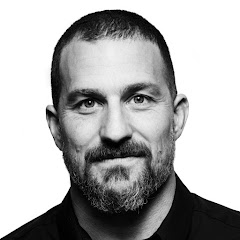
 Andrew Huberman
Mushrooms for the Mind & Immune System | Paul Stamets
Andrew Huberman
Pandemic and immunity 0:00
H5N1 bird flu is presented as a serious future threat, with two Washington dairy farms in quarantine and a stated fatality rate of 40 to 50 percent in humans. From there, the discussion turns to natural intelligence and natural immunity. The point is that your immune system already has the wisdom to make antibodies, and that natural products can work together through evolution.
What fungi are 4:30
Fungi are placed beside animals in the tree of life, with both tracing back to older single-celled relatives. Fungi became multicellular by digesting food outside the body, while animals took food inside. Their mycelial networks can run miles through soil and even turn up deep in the ocean. Mushrooms are only the visible part; mycelium is the larger living system.
Family and first fungi 18:30
John, the older brother, set the pace. He was the serious scientist in a basement lab, while Paul was the younger one kept to the side, listening to coded radio messages and running a long wire with glass insulators. John’s trips to Mexico and Colombia, and his stories about psychedelic mushrooms, sparked Paul’s interest. Paul then spent years looking for psilocybin mushrooms and instead found chanterelles, porcini, shaggy manes, and blueets.
Mushrooms and immunity 25:01
He describes mushrooms as a bridge between food and defense. Some mushrooms are carried into the body by long use and careful choice, while some of the deadliest ones are also delicious, which makes the risk real. From there he turns to immunity, saying fungi can help both through our immune system and through their own chemistry. He traces that work to early antiviral studies, later bio-defense testing, and the old-growth mushroom agaricon.
Vaccine study results 32:32
Two studies with 140 patients are described as showing that turkey tail mushroom mycelium on rice can support mRNA vaccines and lower common side effects. The speaker says the team published the vaccine work first, knowing natural products often meet resistance from conventional doctors. The placebo was rice alone. In the double blind trial, people who took the product had a statistically significant drop in adverse reactions. A later blood draw, six months on, found that the treated group had triple the antibody levels against COVID. The product was taken for only four days, yet it also seemed to extend immunity and shorten symptoms, with unvaccinated people improving 5.1 days sooner than placebo. The idea is that it raises immune readiness without overstating the mechanism.
Immune system complexity 49:01
He says vaccines helped but are limited by fear, viral escape, and their narrow selectivity. That leads him to a wider view of immunity. He describes the immune system as far more complex than conventional medicine allows, with receptors cross-talking and a whole landscape of signals responding when you take something the body reads as helpful. Natural products, he says, can act as an entourage, not a single isolated fix.
Mushrooms as force amplifiers 50:02
He explains bioactivity fractionation, where you split a natural product into parts and test each one for antiviral strength. With Agarikon, the individual molecules did not match the full effect of the mushroom. He argues that mushrooms and mycelium can amplify health on one side of a disease equation, and says he takes Agarikon and turkey tail himself, especially before exposure, during it, and then at a lower maintenance dose.
Biosecurity and natural immunity 1:05:00
The talk turns to biosecurity, with warnings about engineered viruses, factory farming, dense travel, and the risk of horizontal gene transfer when multiple viruses and bacteria mix. He argues that natural intelligence and natural immunity matter because the immune system, shaped by the microbiome and mycelium, can protect the host. He says biodiversity is an investment in biosecurity, cites $2.6 million for screening 130 strains of Agarikon, and points to honeybee studies where mushroom extracts cut viral loads by 14,000 times. He also criticizes regulators for demanding every constituent be characterized and for blocking mycelium as a "novel food."
Therapy and support 1:21:01
Psilocybin is framed as a medicine with major potential for depression, OCD, and related loops of rumination, but only when the experience is directed. The point is not just plasticity in the brain. It is guided change, helped by qualified therapy, careful questions, and a support team. Roots to Thrive is held up as a model, with group preparation, shared experience, and follow-up friendships.
Access and regulation 1:27:01
The discussion then widens to politics, regulation, and access. Psilocybin is described as a tool that may reduce addiction, PTSD, violence, and depression, while also improving tolerance and family life. The speaker argues for strong government standards, trained pharmacists, and adult-only use, and says the present research base already includes 306 clinical trials.
Age and caution 1:36:30
Brain plasticity is high early in life, and the speaker says he is not convinced psilocybin has been shown useful for young people. He does not rule it out, but he says there is no good data showing that people under 18 should use it. The other voice agrees that psychedelics are not for everyone and says more study is needed. It also notes that some indigenous traditions use psychedelics with younger people at coming of age.
Microdosing and scale 1:37:31
Microdosing is defined as a dose below the point where you feel an effect. For most people, that is about one to three milligrams of pure psilocybin. Ten milligrams is called a liftoff dose. In mushroom weight, one gram of mushroom at 1 percent concentration equals 10 milligrams, so 2.5 grams of mushrooms is treated as a standard clinical dose. The speaker stresses that people often confuse mushroom weight with the amount of psilocybin in the mushroom.
Stamets stack effects 1:52:30
The stack is described as improving tapping speed from 43 to 63 in 30 days, which is taken as a psychomotor gain rather than a placebo effect. He links that to nervous system support for walking, typing, playing guitar, teaching, and avoiding falls as you age. He treats niacin as a force multiplier and says lion's mane likely adds another layer for remyelination and dendritic growth.
Cordyceps and timing 1:54:01
Cordyceps and lion's mane are said to work slowly, not as an hour-ahead fix. Cordyceps is complicated because several species are sold under one name, but cordyceps militaris is easier to grow and has studies showing better oxygen use and performance after two or three weeks. He says the research is thin mainly because natural products lack funding and patent protection.
Questioning proof 2:08:30
He says the work is still incomplete, but the openness is exciting. He asks for proof and logic, then says you should stress test bold ideas and dare to be wrong. He likes creative thinking that is not trapped by tradition. Questioning authority, he says, works best with respect and humor, because that keeps dialogue open and builds a bridge between people.
Microbiome and cleanup 2:10:32
He says psilocybin and mushrooms can help expand neurological and immune health. On fungi inside and on the body, he is careful. The skin microbiome matters, and antifungal drugs can disrupt it badly. For cleanup, he gives strong examples: oyster mushroom mycelium can break down diesel, gasoline, bunker sea oil, and some pesticides. It can also filter E. coli, sequester some radioactive particles, and immobilize toxins.
Closing Thanks and Next Steps 2:24:30
Paul Stamets closes by urging creativity, humility, and the habit of asking why before treating anything as fact. He says community grows through respectful engagement, and that Indigenous wisdom and scientific findings point to the same need: a duty to future generations and a legacy built by working together.
AI-generated summary. It can be wrong or incomplete - check anything that matters against the original.
