

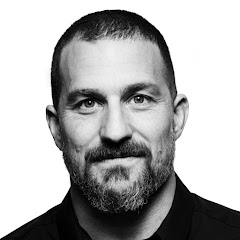
 Andrew Huberman
How to Improve Motivation & Overcome Procrastination | Dr. Masud Husain
Andrew Huberman
Dopamine and the Two Faces of Drive 0:00
Almost every addictive drug, from nicotine and alcohol to heroin, cocaine, and amphetamine, hijacks the dopamine system in the brain. When that circuitry fails, you see profound loss of motivation and apathy. When it goes into overdrive because it has been hijacked by drugs, you see states of hyper motivation. Dopamine is not the only factor shaping motivation, but it is a major one in setting how strongly you pursue outcomes. Dr. Masud Husain, a neurologist and neuroscientist at Oxford, joins Andrew Huberman to explore what really determines drive, using apathy as a window into understanding motivation.
The Case of David 3:01
Husain's interest in this topic began about fifteen years ago with a letter about a man in his thirties named David, who had been a highly successful, sociable finance worker. He suddenly lost all motivation, stopped functioning at work and with friends, was fired, and became too apathetic even to apply for social security. Friends took him in, but he simply sat all day and needed prompting even to shower. Despite this collapse, David was not depressed or unhappy; he seemed content and even looked forward to good things, though he could not say what they were. When asked why he did not listen to music, something he said he enjoyed, he explained that assembling his music system would take five minutes, and that was too much effort. Brain scans showed David had suffered two tiny strokes in the basal ganglia, ancient brain structures found even in the 360-million-year-old lamprey, which link motivation signals to action.
Effort, Reward, and Apathy 9:01
The strokes had damaged the ventral striatum, also called the nucleus accumbens, severing the link between wanting something and acting on it; David could describe what he wanted but never spontaneously start doing it. Testing across many neurological conditions revealed a common pattern: nearly everyone will work for high rewards, but apathetic people are far more likely to decide that a low reward is not worth the effort. Husain's team first tried treating David with L-dopa, the Parkinson's drug made famous by Oliver Sacks's Awakenings, but it had no effect. Switching to ropinirole, a drug that directly stimulates dopamine D2 and D3 receptors, produced a dramatic change within three months. David returned groomed, dressed in a suit, with a new job and a new girlfriend. While David's bilateral basal ganglia damage is extremely rare, the same circuitry is implicated in apathy caused by more common conditions such as stroke, Alzheimer's, Parkinson's, and multiple sclerosis.
One Circuit, Many Kinds of Apathy 17:31
The mesolimbic circuitry linking the basal ganglia to the frontal lobes acts as a shared pathway through which motivation signals such as hunger, thirst, and sex, as well as goals like learning a language, engage the brain's action systems. Research has identified distinct domains of apathy, including behavioral, social, emotional, and cognitive, and these can be dissociated, so someone might be socially withdrawn yet intellectually driven. Because signals for behavior, cognition, emotion, and social interaction arise in different brain regions before funneling through the basal ganglia, a person's overall motivational profile can be uneven across these domains.
Weighing Reward Against Effort 21:02
Husain describes motivation as a kind of neuroeconomic calculation: faced with many possible activities, the brain estimates how rewarding each one is and how effortful it would be, whether that effort is physical, cognitive, social, or emotional, and this shapes what a person actually chooses to do. This weighing does not have to be conscious; biases built from past experience, such as having struggled with Spanish, quietly influence whether someone feels a new challenge like learning French is worth attempting. Husain frames each potential behavior as requiring the crossing of an "activation hill," which varies enormously between people and between tasks.
Why Apathetic Brains Work Harder 24:32
Testing Oxford students in an MRI scanner, Husain's team asked them to judge whether a given reward was worth a given amount of physical effort. As with patients, even healthy but apathetic students were willing to work for high rewards but not low ones, and this decision activated the ventral striatum and medial frontal areas, the same regions damaged in David. Unexpectedly, apathetic students showed greater activity in these regions than motivated students while simply deciding, not yet acting. Husain interprets this to mean apathetic people burn more brain energy, more glucose, just to make the decision itself, so the activation barrier to starting a task is not only behavioral but metabolic, which helps explain why, outside a lab setting where people still have to comply, someone facing that extra energy cost might simply choose not to act at all.
Effort Costs and Activation Energy 28:00
Husain describes how apathetic people show more activity in dopamine-related brain circuits when making decisions, meaning they are working harder just to reach the same choice a motivated person makes easily. He shares a personal memory of the difference between colleagues who only talked about doing great studies and MIT peers who would simply say let's do it tonight, which showed him that some people have a naturally low activation energy for starting things.
Changing the Barrier to Action 29:31
Using the example of a woman who gets her partner to hang pictures by asking him to teach her rather than just do the chore, Huberman shows how reframing the incentive can drop the activation energy needed for a task to near zero. Husain explains that you can change motivation practically in two ways: reduce how much effort a task feels like it requires, for instance by breaking it into smaller subcomponents, or change the incentive so the reward feels more meaningful.
Planning and Breaking Down Tasks 33:32
Husain notes that every decision carries a brain cost, so planning a day or week in advance can lower the ongoing burden of constant on-the-fly choices. He also describes how a large, formidable project, like one that will take three months, becomes manageable when broken into smaller pieces, especially if a manager acknowledges each completed piece, since that recognition itself becomes a motivating reward.
Perceived Versus Actual Effort 35:00
Huberman raises the idea of testing whether perceived effort can be separated from real physiological effort, such as by having someone bike in a virtual environment where the apparent steepness of a hill is manipulated independently of the actual resistance. Husain agrees this would be revealing, noting that subjective valuation of effort likely varies enormously between people and could diverge sharply from measurable physiological costs like oxygen use or lactic acid buildup.
Psychological Tricks in Competition 37:02
Huberman brings up the endurance runner Ken Rideout, who beats competitors partly through psychological tactics, like removing his earbuds and claiming he never gets tired, which shakes his rivals' perceived effort. Both agree this shows that the same physical effort can be subjectively revalued as easier or harder depending on framing, even though the underlying physical demand stays constant.
Reward, Learning, and Future Choices 39:02
Husain explains that after an action is initiated and carried through, the outcome produces either a pleasurable or aversive response, and this graded outcome feeds into reinforcement learning that shapes future decisions. If a choice turns out badly, its subjective value drops for next time, which is why dopamine matters not just for weighing effort against reward but also for learning from past actions.
Domain Specificity of Failure and Success 45:01
Huberman raises concern about overgeneralizing failure, using his own childhood failure at learning a musical instrument as an example, and argues that people need enough domain specificity to avoid concluding they are broadly incapable. Husain agrees, explaining that the motivational pathway they have been discussing acts as a final common pathway shared across different pursuits, while the decisions about which specific goals to chase are computed elsewhere in the brain, which is why failing at one thing does not have to mean failing at everything.
Perseverance and Chop Wood Carry Water 48:01
Husain stresses that motivation is not only about starting but also about persevering to finish, noting that some people are energetic starters who never complete anything. Huberman describes his own practice of doing disliked tasks simply to build the capacity for effort, using the phrase chop wood carry water, and argues that getting good at effort in things you are not passionate about helps you move faster once you do find a passion.
Apathy Versus Depression 49:30
Husain warns that maladaptive overgeneralization from repeated failure can tip into clinical depression, where a person begins to feel they are bad at everything. He describes current research distinguishing pure apathy, as seen in David with no depression, from pure depression without loss of motivation, and notes that some people meet criteria for both, making the biology separating these two conditions an active and complicated area of study.
Self-Concept and Ambition 51:00
Huberman questions why some people stay resilient and keep trying despite repeated setbacks while others are derailed by a single big failure, wondering where self-perception fits into the motivational picture. Husain responds that there is no current mechanistic explanation for these differences in ambition, though psychologically some people are content around the average of the population while others are driven to reach the very top, and neuroscience has not yet identified what distinguishes these two types of individuals.
Flow Versus Push 54:00
Dr. Masud Husain describes a conversation with someone who accused him of relentless intense pursuit, which led him to notice a distinction people in Eastern medicine and philosophy draw between being pushed from behind versus pulled from the front. He admits this framing feels mystical and vague to someone trained in Western science, but he suspects there is something real in the idea that some people expend extra energy forcing themselves toward goals while others simply flow through accomplishment without that push.
Ambition and Happiness 55:00
Husain brings up the Harvard study of aging, which followed men from their late teens into their sixties and seventies. Some lived average lives with average families, incomes, and houses. Others looked destined to soar but fell along the way, and a smaller group actually did rise to great heights. Yet when researchers measured happiness, it was the average person who reported the highest levels. Ambition does not necessarily equate with happiness, though it remains a powerful drive for many people, and Husain suggests it would be valuable to research how ambition itself is encoded in the brain, including the question of what counts as realistic ambition versus the kind that pushes someone toward an unlikely career in academic neurology and journal editing, as happened in his own life.
Psychedelics and the Changeable Self 58:30
The conversation turns to psilocybin, distinguished clearly from MDMA and ketamine, which are not classic psychedelics. Husain notes emerging research suggesting psychedelics affect anhedonia, the reduced ability to feel pleasure, possibly by changing how much people devalue rewards when their mood is low. He connects this to his broader research theme that the self is not fixed. He gives the example of thyroxine, the thyroid hormone, showing that too much or too little of it can alter irritability, cognitive processing, and even mimic dementia, illustrating how something as simple as a hormone imbalance can change who a person seems to be. Citing Marvin Minsky's idea of the "society of mind," he explains that the self emerges from many cognitive modules, memory, attention, language, perception, body representation, and removing or damaging any one of them changes the self rather than erasing it.
Identity, Roles, and Dementia Risk 1:03:00
Husain distinguishes personal identity, built from having one body and continuous first person experiences over time, from social identity, built from roles like being a student, parent, or fan of a sports team. He points to research showing that people who maintain or grow their social relationships as they age have far lower risk of dementia than those whose networks shrink after retirement. Curiosity and openness to new hobbies also correlate with lower cognitive decline, as does having a genuine sense of purpose, a finding he calls remarkable. This leads to the idea that evolving the self may be less about labels people attach to themselves and more about the verbs, the actual things they do and strive toward.
The Patient Who Regained Motivation 1:09:00
Returning to the case of a patient referred to as David, Husain recounts that after recovering from apathy, David could not believe he had once been unable to do something as simple as connecting cables to listen to music. He compares this to someone with a skill trying to understand another person's incapacity, but from the inside, since David had memories of being highly productive before his strokes. Husain also mentions Carly Simon, who has spoken about developing apathy alongside Parkinson's disease, noting that even with full insight into the problem, awareness alone does not let someone override circuits governing motivation.
Dopamine, Mania, and Addiction 1:11:32
Husain describes how nearly every addictive drug, from nicotine and alcohol to heroin, cocaine, and amphetamine, hijacks the same dopamine circuitry running from the basal ganglia to the frontal lobes that, when underactive, produces apathy like David's, and when overactive, produces hyperactive, addictive states. He also draws a distinction from research by Kent Berridge showing that wanting, the motivation to pursue a goal, is driven by dopamine, while liking, the actual pleasure from an outcome, involves opioid neurotransmitters instead, meaning a person can want something intensely without truly liking it once obtained.
Doom Scrolling Without the Dopamine Hit 1:14:32
Discussing compulsive online scrolling, Husain pushes back on the popular claim that such behavior is simply chasing dopamine hits, saying the evidence for that is not strong. He suggests the behavior may instead be a kind of mindless numbing that neither feels particularly good nor bad, yet still gets repeated. He references an old PET scanning experiment at Hammersmith Hospital in London that found increased dopamine release in the ventral striatum while people played video games, but notes that separating whether that release reflects motivation or actual pleasure is not straightforward given the limits of the scanning technique.
Dopamine and Forward Motion 1:20:01
Husain notes that dopamine is classically tied to movement, which is why its depletion causes Parkinsonian symptoms, but he suggests it also plays a role in moving thoughts forward, a kind of mental momentum tied to motivation. In hyperdopaminergic states such as mania or amphetamine use, everything seems oriented toward the future rather than reflection on the past. The conversation closes by comparing social media to an endless, perfectly engineered video game, constantly updating with likes and comments so that the reward loop never resolves, much like the pull Husain feels occasionally toward gambling in Las Vegas.
Motivation Rather Than Action Alone in Parkinson's 1:21:30
Dopamine depletion is linked to Parkinson's disease, but researchers increasingly ask whether the core problem is motivation rather than movement itself. The classic example is a Parkinson's patient in a burning house who can suddenly run out, suggesting that when motivation ramps up enough, the action system engages even though everyday movement is normally slow. This reframes bradykinesia, the slowness of movement seen in Parkinson's, as possibly a motivational deficit rather than a purely motor one, since the basal ganglia affected by the disease handles both action and the motivational signals that link goals to outcomes.
Dopamine Beyond Motivation 1:23:03
Dopamine also supports working memory, the short-term holding of information in mind, based on classic work by Patricia Goldman-Rakic. It contributes to executive function, including starting or stopping actions, switching between goals, and planning ahead. Changes in dopamine affecting the frontal lobe can also cause disinhibition, where a person loses the normal restraint that stops impulsive thoughts from being spoken aloud.
Incentives Sharpen Movement Even in Disease 1:24:32
Eye movement experiments in Parkinson's patients, conducted with colleague Sanjay Manohar, show that increasing the reward for a rapid eye movement raises its velocity, much as it would in anyone else, and adding dopamine boosts that velocity even further. This supports the idea that inaction in Parkinson's isn't simply about reduced capacity but about needing stronger incentives to act, revealing that even mild Parkinson's patients become almost hyperrational, only initiating action when a real payoff exists, unlike most people who expend a lot of energy on unnecessary movement and activity.
What Game Are We Playing 1:27:01
Reflecting on life's larger purpose, the idea is raised that the first third to half of life is mostly spent learning social contingencies and skills, followed by a middle period of building family and career, until people eventually start asking what the whole game is for. Most people set that question aside because it feels too heavy, though it can also be uplifting, revealing life as a remarkable gift rather than a meaningless sequence of evolutionarily wired drives. Culture strongly shapes this process, since the environment and family a person grows up in defines many of their goals and aspirations, and each generation also transmits and reshapes that culture for the next.
Deathbed Decisions and Chop Wood Carry Water 1:31:02
Asked about what drives a career in medicine and research, the answer centers on a personal test called the deathbed decision, choosing only pursuits that will feel valuable when looking back from the end of life, whether the benefit is personal, for family, or for others. This doesn't erase the necessity of unavoidable, unglamorous tasks, captured by a friend's phrase chop wood, carry water, describing rural chores done without much enjoyment but whose satisfaction comes only after they're finished.
Attention as Limited Brain Capacity 1:35:00
Attention exists because the brain cannot process the flood of sensory information arriving every millisecond through eyes, ears, and skin, so it must select what matters. Bottom-up attention is grabbed automatically by urgent sensory events, like a piece of building falling toward you, while top-down attention is goal-directed, such as scanning a crowded station for a friend wearing red. Internal thoughts compete for these same limited resources, so closing your eyes is simply an extreme case of directing all resources inward, and an open-eyed person can still be pulled away by an internal thought, like remembering unmade evening plans.
Inner Chatter and the Cost of Being in Your Head 1:41:00
Many people report unwanted inner chatter, and some of the most effective people seem to have low activation energy, meaning they make a decision after some contemplation and then fully engage in the task with minimal internal noise, resembling a flow state. There's a real energetic cost to staying inside one's head, and it's suggested that part of the appeal of high-arousal social media and even audiobooks is that they let people escape their own thoughts rather than because of what they're actually consuming.
Working Memory Limits and Thinking Styles 1:44:01
People differ in how they think through problems, some enjoying branching permutations of possible solutions while others prefer to narrow choices quickly, partly because working memory has strict capacity limits and the quality of each held item degrades as more items are added. An example given is neuroscientist Karl Deisseroth, who reportedly spends an hour or two most nights forcing himself to think in complete sentences, a disciplined alternative to writing things down or using flowcharts to offload mental effort.
Dopamine Baseline and Stimulant Use 1:46:00
Research on working memory and dopamine suggests people have low, medium, or high baseline dopamine levels, and boosting dopamine with drugs helps working memory mainly in those starting from a low or medium baseline, while those already at a high baseline gain nothing or even get worse, an inverse U-shaped effect. This matters given how common stimulant and nicotine use has become, including rising oral nicotine use, since most users, especially high-performing students taking stimulants for better grades, are unlikely to get a cognitive boost and may instead perform worse. The pull toward nicotine and other plant alkaloids is described as a long-running human pattern stretching back thousands of years across cultures.
ADHD Diagnosis and Overdiagnosis 1:48:31
Dr. Masud Husain says he receives many questions about ADHD, and he believes it is a real clinical condition for some people, but he also thinks overdiagnosis happens. He notes that the number of children diagnosed with ADHD who still carry the diagnosis into adulthood tends to drop, suggesting some brain plasticity. The core difficulty in diagnosis is deciding where normal attention lapses end and a disorder begins, since attention exists on a continuum and everyone experiences lapses. Diagnosis often hinges on whether the attention problem has a real functional impact on someone's schoolwork, social life, or daily performance, which makes the line inherently subjective.
Vigilance, Boredom, and ADHD 1:51:31
Husain brings up Second World War studies of British radar operators who had to watch a mostly empty screen for hours, waiting for enemy planes. Researchers found a vigilance decrement, meaning that even healthy brains get worse at noticing rare, boring events over time. People with ADHD show a related but distinct signature: unusually high variability in their responses over time, more so than people without the diagnosis. Husain suggests this variability might shrink if motivation were higher, tying attention problems back to motivation itself. He also points to possible dysfunction in the basal ganglia, a brain region linked to working memory and motivation, alongside the frontal and parietal regions already known to matter for attention.
Long-Term Motivation and Discounting 1:54:30
Andrew Huberman asks how the same reward circuitry can drive both quick tasks, like making coffee, and long efforts spanning years, like a PhD. Husain answers that most lab studies only cover short timescales, and he doubts the basal ganglia handle long-term timekeeping. Instead, extended planning and perseverance likely depend on the frontal cortex constructing higher-level goals. This connects to temporal discounting, the tendency to value smaller immediate rewards over larger delayed ones, which varies a lot between individuals. Husain admits neuroscience has not yet explained what allows some people to wait a year for a bigger reward while others take a mediocre one within a week.
Alzheimer's Pathology Without Dementia 1:59:31
Husain explains that Alzheimer's disease does not always cause dementia. Post-mortem studies of people who donated their brains after aging show that roughly 20 to 30 percent had Alzheimer's pathology, meaning plaques of amyloid protein and tangles of tau protein, along with some neuron loss, yet never developed dementia. Researchers are studying what gives some people this cognitive resilience. Physical factors matter, such as regular exercise, controlled blood pressure, managing diabetes risk, cholesterol control, and avoiding excess alcohol and smoking. But having a sense of purpose, staying socially connected, and remaining curious and open to new ideas appear almost as important, though the biological mechanism behind this is still unclear.
Early Apathy as an Alzheimer's Warning 2:03:30
Studies of healthy older adults with no dementia diagnosis show that those who self-report high apathy have twice the risk of later developing Alzheimer's disease. This suggests behavioral changes like loss of motivation can appear more than ten to fifteen years before cognitive symptoms show up, since amyloid and tau can build up in the brain that long before diagnosis. Husain sees this as a large window for potential intervention, especially since monoclonal antibody drugs that clear amyloid already show small benefits in early Alzheimer's, and might do more if applied far earlier.
Ethical Questions and Treatment Progress 2:06:30
The conversation turns to whether people should be told they carry Alzheimer's pathology if they were never going to develop dementia, a dilemma Husain compares to earlier debates over predictive genetic testing for conditions like Huntington's disease. He also highlights how far treatment has come in neurology generally, contrasting the limited options of corticosteroids for multiple sclerosis decades ago with today's wide range of immune therapies. He points to deep brain stimulation for Parkinson's disease as a once-risky, now transformative treatment, and mentions emerging techniques like focused ultrasound to temporarily open the blood-brain barrier for targeted drug delivery.
Training Attention and Cutting Distraction 2:11:00
Asked whether attention itself can be trained, Husain says evidence for generalizable improvement is weak. Video game training and similar exercises improve performance on the specific task practiced, including in stroke patients with neglect syndrome, but these gains rarely transfer to other activities. What does help is reducing distractions directly, such as turning off notifications and closing email while focusing on something else. Huberman adds that real focus involves both pleasure and a kind of friction or effort, raising the question of whether people can actually train attention or simply avoid letting it get pulled toward competing stimuli, framing this as an economic tradeoff between concentrating resources narrowly or spreading them widely.
Drawing As Personal Enrichment 2:15:31
Dr. Masud Husain says that outside work and family, he most enjoys drawing and art, including the figures he drew for his own book, alongside physical activities like going to the gym. He explains that even something like a still life, done for only half an hour and with no value to anyone else, brings intrinsic pleasure and lets him disengage fully from everything else while slowly improving a skill. He notes this kind of activity is what might be called enriching, separate from productivity or recognition.
Closing Thanks And Reflection 2:16:31
The host thanks Dr. Masud Husein for his clinical work, research, writing, and willingness to share knowledge relevant to everyday human experience, both its pathologies and its normal workings. He expresses hope that Husein will return for another conversation given the pace of his ongoing discoveries.
Podcast Support And Announcements 2:17:30
The host closes with standard requests to subscribe, follow, and review the podcast on YouTube, Spotify, and Apple, and to check out the episode sponsors. He announces his first book, Protocols: An Operating Manual for the Human Body, available for presale at protocolsbook.com, and points listeners to his Huberman Lab social media accounts and the free monthly neural network newsletter at hubermanlab.com.
AI-generated summary. It can be wrong or incomplete - check anything that matters against the original.
