

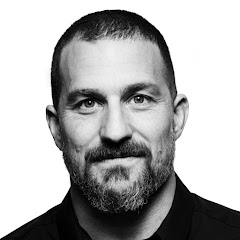
 Andrew Huberman
Essentials: Neuralink & Technologies to Enhance Human Brains | Dr. Matt MacDougall
Andrew Huberman
Brain as an organ 1:00
McDougall says the brain is a set of functional modules held together in a bone box. When parts fail, the effects can be stark, as in a young man with bilateral frontal lobe damage who lost impulse control after a car accident. He also notes that the brain drives hormone control, vision, sensation, and movement, and that neurosurgery can sometimes produce real repairs in cases that once seemed hopeless.
Neuralink’s first use 5:30
Neuralink is making a neural implant placed by a robot because the electrodes are too small for a human hand to place with enough precision. Its first target is people with spinal cord injury who are effectively quadriplegic but still have intact motor cortex. The near-term aim is not to reconnect them to their limbs, but to let them control a computer, mouse, and keyboard with their own motor intentions and regain digital freedom.
Toward body reconnection 15:01
He says the long-term path could involve implanting both the brain and the spinal cord, then linking them so signals can bypass the damaged section. That would let intact motor commands from the brain reach the wiring below the injury, whether the injury came from a car crash, motorcycle crash, or gunshot wound. He also describes the present device as safe enough that he would trust it far beyond many routine FDA-approved operations.
Brain-to-brain communication 16:30
A chip can move the work now done by texting or a keyboard into the brain. The same system could help you speak thoughts more naturally and have them heard through something like a bone-conducting implant. The point is not a leap into magic. It is a device that can grow from simple control into much richer communication and, eventually, wider brain interfaces.
Animals and testing 21:30
The work depends on animals because there is no other way to prove safety for the FDA. Pigs are used as a body-size and skull-shape match for implant safety, while monkeys are used to check that the signals are useful for control. He says the team tries to give the animals agency, with no deprivation and no forced participation beyond surgery.
What augmentation could mean 26:31
He wants the next decade or two to bring better control over addiction, depression, suicide, and obesity. Farther out, he imagines fuller human cognition joined with AI, direct access to information without first reading it, and communication that is not limited by speech. He also thinks the work is a small opening toward people banding minds together in ways that are hard to build today, and he invites engineers to join the effort.
AI-generated summary. It can be wrong or incomplete - check anything that matters against the original.
