

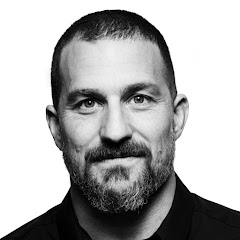
 Andrew Huberman
Bringing Extinct Species Back to Life | Dr. Beth Shapiro
Andrew Huberman
Direwolf de-extinction explained 0:00
Dr. Beth Shapiro describes how her team recreated the direwolf by sequencing genomes from direwolf fossils, identifying the genetic changes that made the animal bigger, more robust, and light colored in its coat, and then engineering twenty of those edits into a grey wolf genome. She explains that this work is not separate from saving living species, since the same tools and technology apply to both, and public excitement over mammoths, dodos, and thylacines helps attract the investment needed to also prevent living species from going extinct.
Meet Dr. Beth Shapiro 1:01
Andrew Huberman introduces Dr. Beth Shapiro as an evolutionary biologist who previously worked at UC Santa Cruz and the Howard Hughes Medical Institute before becoming chief scientific officer at Colossal Biosciences, where her work on de-extincting species like the woolly mammoth, dodo bird, and direwolf connects to broader efforts in species preservation and genomics.
What actually defines a species 3:02
Shapiro explains that species is a human invention rather than something biology itself recognizes, since people need categories in order to talk about and share knowledge of animals. She traces this back to Linnaeus, using the example of buffalo, where African, Asian, and American buffalo all got the same common name because early Europeans thought each would make a good coat, even though genetically they are unrelated; the American bison was given the formal name bison bison bison to resolve this confusion. She contrasts the familiar biological species concept, which says two animals are the same species if they can interbreed and produce fertile offspring, with other useful concepts such as the genetic species concept based on DNA similarity thresholds, and the geographic species concept used in conservation, where a Florida panther and a Texas panther might be classified separately simply based on location.
Neanderthals, Denisovans, and interbreeding 9:01
Shapiro discusses how her husband Ed Green worked on assembling the Neanderthal genome as part of Svante Paabo's research group, and how a tiny finger bone found in Denisova cave in Russia revealed a separate human lineage called Denisovans. She explains that when anatomically modern humans left Africa, they encountered and interbred with Neanderthals, meaning most people today carry between two and five percent Neanderthal DNA, which shows that species boundaries are flexible depending on which concept is applied. She also notes that the human fossil record in Africa is fragmentary, so a single partial jawbone can reshape ideas about human evolutionary history, while ancient DNA from bones like the Denisovan finger lets researchers directly compare extinct lineages to living people and confirm shared ancestry.
How species diverge and reconnect 15:31
Evolution happens through random mutations that build up in a genome over time. When two populations are isolated in different habitats, different mutations become fixed, and small population size means even harmful mutations can become locked in just by chance. Over a long enough time, two lineages drift apart, and whether they can still interbreed when they meet again depends entirely on what mutations happened to arise during that separation. Sometimes a mutation blocks fertilization or embryo development, and sometimes nothing blocks it at all, allowing mixing to happen freely.
Bears show how hybridization really works 17:30
Humans and Neanderthals split around 300,000 to 500,000 years ago, and brown bears and polar bears split about half a million years ago, yet brown and polar bears still interbreed whenever their ranges overlap, producing so-called grizzly bears or pizzly bears. Ancient DNA shows a polar bear from Alaska, over 100,000 years old, already carried brown bear ancestry, and polar bears trapped on Alaska's ABC islands during the last ice age interbred with brown bears about 20,000 years ago, leaving every brown bear alive today with some polar bear DNA. The mixing only ever goes one direction: hybrid cubs survive as brown bears, never as polar bears, partly because polar bears are induced ovulators, which makes mating more likely when a brown bear male encounters a female polar bear, and partly because any brown bear ancestry ruins the pure white coat a bear needs to hunt seals successfully.
Neanderthal DNA in humans today 22:31
Humans and Neanderthals interbred, leaving people today with roughly two to five percent Neanderthal DNA, though it is a different two to five percent in each person. Pooling DNA across everyone alive today could reconstruct more than ninety percent, possibly ninety five percent, of the full Neanderthal genome, showing that most Neanderthal DNA was not harmful and could live on in healthy humans. This discovery shortened the evolutionary branch scientists use to study what makes us human from three to five million years, the gap to chimpanzees, down to just 300,000 to 500,000 years, narrowing the search to the small sliver of the genome with no surviving Neanderthal trace. Some surviving Neanderthal genes carry real effects, including one linked to type 2 diabetes in Latin American populations, one tied to pain sensation, and one found at about fifty percent frequency in Asian populations that raised susceptibility to severe COVID, likely because it once protected against some other past disease. Neanderthals also carried the MC1R gene linked to red hair, a trait also seen in mammoth remains.
Choosing which species to revive 32:01
Beth Shapiro explains that picking a species for de-extinction comes down to technical, ethical, ecological, and social factors. Technically, you need recoverable DNA, which rules out dinosaurs since no DNA survives past tens of millions of years, while the oldest usable DNA comes from a mammoth bone roughly one to two million years old. DNA breaks down through three main processes after death: ultraviolet light damage that proofreading enzymes no longer repair, physical breakage from freezing and thawing, and microbial decay from fungi and bacteria. Cold, dry environments like the Arctic preserve DNA far better than hot, swampy places, which is why dodo bones from Mauritius have yielded almost nothing usable, and the best dodo genome instead came from a bird that was shipped alive to Europe and is held at the Danish Museum of Natural History.
Understanding extinction before reversing it 35:00
Shapiro stresses that you need to know why a species went extinct before bringing it back, so you avoid creating something that could go extinct again or that might harm other species once reintroduced. This means understanding the ecological role an animal played and whether that niche still exists, since ecosystems do not sit idle waiting for a species to return. She points to Pleistocene Park in northeastern Siberia, run by Sergey Zimov and his son Nikita, where reintroduced bison, horses, deer, and muskox have been shown to restore tundra ecosystems simply by trampling snow, which changes insulation and moisture and brings back a more diverse mix of plants.
Why the dodo and bird tools matter 39:00
Shapiro says another criterion is impact, which led her to push for a bird de-extinction program at Colossal alongside the existing mammoth and thylacine projects. Birds cannot be cloned with the somatic cell nuclear transfer method used for Dolly the sheep because their egg cells are not accessible at the right stage, so new tools had to be built specifically for them, tools that also apply to bird conservation generally. The dodo was chosen partly for its evocative appeal and recognizable look, even though usable DNA from Mauritius itself has not been found. The conversation closes with Shapiro explaining a case where a female condor produced a viable offspring without mating, likely due to an error during meiosis that left an egg with two full chromosome sets.
Chromosome inheritance and sex determination 44:00
The discussion covers what happens when both chromosome copies come from only one parent, as seen in conditions like Prader-Willi and Angelman syndromes, where losing genes normally active only from mom or only from dad causes developmental problems. Sex itself is determined differently across species: humans use an XY system where males carry the Y, birds and some other animals use a reversed WZ system where females carry the distinct chromosome, and alligators and crocodiles determine sex by the temperature of the egg during development. Shapiro also explains that sperm carrying the Y chromosome are smaller and can be separated by spinning them, allowing some control over offspring sex, and that cloning methods bypass the question entirely since you already know the sex of the starting tissue cell.
Mammoth genome and the Jurassic Park myth 50:00
Mammoths are confirmed as mammals through genome sequencing rather than physical traits like fur, and their closest living relative turns out to be the Asian elephant, more closely related to mammoths than Asian elephants are to African elephants. Shapiro clarifies that the Jurassic Park method of pulling DNA from amber-preserved mosquitoes and patching gaps with frog DNA is fiction, not how de-extinction science works. Instead, scientists compare full genome sequences from mammoths and Asian elephants directly, finding them about 99 percent similar, roughly the same similarity humans share with chimpanzees.
What counts as a species, and the dire wolf 52:31
Shapiro pushes back on judging de-extinction projects by a strict genetic similarity threshold, arguing that concept was built for species that evolved gradually over long branching lineages, not for engineered animals like Colossal's mammoths or dire wolves. The goal isn't an identical copy of a dead individual but an animal capable of filling that species' ecological role, since even mammoth genomes differ from each other by millions of DNA letters. She addresses the public debate sparked by Colossal's dire wolf, explaining that researchers sequenced fossil dire wolf genomes, identified roughly 20 genetic changes responsible for larger size, robustness, and a lighter coat, and engineered those into a grey wolf genome. The resulting animal is larger, more muscular, and has longer, fuller, lighter fur than a grey wolf, chosen deliberately to recreate specific extinct traits.
Safe editing of the dire wolf coat 58:00
Beth Shapiro explains how her team handled the light colored coat trait in the dire wolves they created. The fossil dire wolf genomes carried gene variants for pale coats, but copying those exact variants into grey wolves risked bystander effects, including the kind of albinism linked to blindness or deafness. Rather than take that risk, the team achieved the same light coat look using different, already proven safe edits found in living pale colored dogs and grey wolves. She describes this same logic applying to turning an Asian elephant into a woolly animal, which requires reshaping skin structure itself to support more hair follicles and sebaceous glands, all while protecting the health of an animal that takes 22 months to gestate and 14 years to reach sexual maturity.
Meet Romulus, Remus, and Khaleesi 1:01:30
Shapiro describes the three dire wolves currently alive, two male twins named Romulus and Remus, nearly two years old, and a female named Khaleesi, about 18 months old. They are not being bred because they are too closely related, so hormones are used to prevent mating. Khaleesi was raised alone and is noticeably goofy, while the hand reared males are clearly wild animals, with Remus somewhat approachable and Romulus wanting nothing to do with people, despite being identical twins. The wolves are large, having weighed at least 120 pounds at one point, and Shapiro notes that even trained caretakers treat them as wild, not domestic, animals. She also points out that breed behavior stereotypes in dogs generally do not hold up genetically, aside from joking about chihuahuas, and credits researcher Elinor Karlson's work on wolf dog hybrids and behavior genetics.
Regulation, ecosystems, and who decides 1:03:32
Shapiro stresses that de-extinction work operates under strict regulatory oversight, not Jurassic Park style freedom, citing the USDA's recent deregulation of a gene edited American chestnut tree aimed at restoring a species wiped out by imported fungal disease in the early 1900s. The conversation turns to how humans have always reshaped ecosystems, from driving megafauna extinct through hunting to moving species like English birds around the world, and Shapiro argues that treating any single historical snapshot as the one true natural state is a mistake. She points to the fox populations on California's Channel Islands, brought by the Chumash long ago, as an example of introduced species now valued as protected biodiversity. The discussion closes on the idea that releasing dire wolves would compete with already struggling grey wolves, so for now the animals are kept for study, with the harder unresolved question being that nobody has a clear window into how future ecosystems with revived species would actually turn out.
Wolves, Tasmanian Tigers, and Ecosystems 1:11:30
Beth Shapiro explains that she thinks about de-extinction in terms of restoring ecosystem resilience. When grey wolves were reintroduced to Yellowstone, their return cascaded down the food chain, reducing overgrazing and even changing how rivers flowed as riverside plants recovered. She draws a parallel to the thylacine, the Tasmanian tiger, which was once the apex predator in Tasmania. Its absence may be connected to the Tasmanian devil facial tumor disease, a problem made worse because devils are genetically similar enough to pass cancer between each other through bite wounds. Had a top predator still been present to remove sick individuals from the population, this disease might never have taken hold the way it has.
Saving the Northern Quoll 1:13:30
Shapiro addresses the common question of why Colossal focuses on extinct species rather than living ones, insisting the tools and technology serve both goals, and that public excitement about mammoths and dodos drives investment that also helps living species. She gives the example of the northern quoll, a small carnivorous marsupial in Australia threatened by the toxic, invasive cane toad, which kills any quoll that eats one. Mammals elsewhere that already eat toxic toads survive thanks to a single amino acid change in one gene, and Colossal's Australian partners have replicated that exact change in quoll genomes, with lab tests showing it allows the toxin to break down safely. This single, precisely targeted edit could let quolls eat cane toads and avoid extinction.
Mosquitoes, Gene Drives, and Grasses 1:18:31
Turning to mosquitoes, Shapiro notes that only certain species carry diseases like malaria and dengue, and that human-built environments inflate their populations far beyond natural levels, meaning population reduction could be ecologically safe rather than reckless. She discusses gene drives, synthetic biology tools that spread engineered traits through a population, noting they can be designed to fade out after a fixed number of generations and face strong natural selection against them. She extends this to invasive cheat grass in the western United States, whose shallow roots and flammability fuel wildfires, suggesting a gene drive could suppress it long enough for deeper-rooted native grasses to return.
Stewardship and the Cost of Inaction 1:23:31
Shapiro cites the 1990s introduction of Texas panthers into Florida to rescue inbred Florida panthers suffering crooked tails and reproductive defects, which worked temporarily before inbreeding resumed once the population was isolated again, showing humans must act as ongoing stewards of ecosystems. She argues that natural selection alone often can't keep pace with human-driven environmental change, and that labeling genetic tools too risky doesn't avoid a decision, it simply accepts a future with less biodiversity. Doing nothing, she stresses, is itself a choice with consequences.
Decision making involves local communities 1:26:00
Beth Shapiro explains that Colossal relies on advisory panels made up of local people rather than letting scientists decide alone. For the Tasmanian tiger project, the panel includes politicians, loggers, animal workers, and conservation biologists. The Moa project in New Zealand is led by the Ngāi Tahu Research Centre, with Māori stewards making the core decisions about how many moa to create and where to release them. Shapiro also stresses the value of public communication, noting the mixed reaction to the dire wolf announcement, where some scientists objected to the terminology while many members of the public, including students, became newly engaged with ideas about extinction and synthetic biology.
Genetic selection already happens in humans 1:29:02
The conversation shifts to human genetic engineering, starting with the case of a Chinese scientist who edited the genomes of babies to disrupt the HIV receptor, a story that briefly left it unclear whether he would be celebrated or imprisoned before the Chinese government shut down his lab. The discussion moves to the rise of embryo screening companies that let people select for traits like intelligence or height, which raises uncomfortable comparisons to eugenics. Shapiro points out that humans already perform genetic selection constantly through mate choice, using the example of height in Northern Europeans, which traces back to genes introduced by Steppe migrants around 4,700 years ago and has since plateaued near its biological limit.
Reframing human intervention as stewardship 1:35:30
Shapiro argues that what unsettles people about engineered human traits is the idea that one generation could shape the choices of the next, unlike with domesticated animals bred for specific roles. She cites baby KJ, a six-month-old cured of a rare urea cycle disorder through a custom CRISPR base editor delivered to his liver after a six-month collaborative effort, as an example of this technology used for healing. She reframes the question of playing God, suggesting humans have always influenced other species, from early wolf domestication to modifying corn and corals, and that the real task now is using these tools responsibly. The discussion then turns to black-footed ferrets, where one male named Scarface helped rebuild the population after prairie dog overpopulation damaged grasslands, raising questions about inbreeding and genetic diversity, illustrated by the nearly identical genomes of Channel Island foxes.
Black-footed ferret recovery story 1:40:31
Beth Shapiro describes the black-footed ferret as a case study in genetic rescue. Farmers trying to poison prairie dogs accidentally wiped out nearly all black-footed ferrets, which depend on them for food, and the species was thought extinct. A family dog outside Meeteetse, Wyoming killed one, a taxidermist recognized it as something unusual, and a surviving wild population was found and brought into captive breeding, with a male named Scarface becoming a key founder. The program now releases about five hundred ferrets a year, but all descend from a handful of closely related animals from that one population, so genetic diversity keeps shrinking.
Cloning restores lost diversity 1:44:00
Frozen tissue samples in the San Diego Frozen Zoo came from a different, unrelated founding population, so scientists used cloning, the same method behind Dolly the sheep and the colossal mammoth and dire wolf projects, to bring that lineage back. A skin cell is injected into an egg, and proteins in the egg itself reprogram it without needing added stem cell factors. The first clone, Elizabeth Ann, born in 2020, could not reproduce due to an ovary issue, but a second clone from the same line did reproduce, adding fresh genetic diversity to the population. A separate threat remains plague, and researchers hope genetic engineering can make ferrets plague resistant the way domestic ferrets already are.
Modeling ecosystems and editing ourselves 1:49:00
The conversation turns to using AI to build digital twins of ecosystems, modeling variables like mosquito populations or quail numbers before releasing a species, something Shapiro says is already being explored for smaller biological systems and is paired with detailed care reports written before any de-extinct release, including one for the blue buck. She predicts gene editing tied to fertility, screening out disease genes before conception, could become common within three to five years. Drawing on her book Life as We Made It, she suggests a crisis revealing a lethal genetic variant could be the event that pushes society toward editing humans directly. The segment closes on how public comfort with new technology often hinges on delivery method, comparing attitudes toward IVF, sperm selection, and the recent drop in needle phobia once GLP drugs moved from vials to pens.
Why delivery method matters more than data 1:54:00
Public fear of new technology often has less to do with the underlying data than with how something is delivered or presented. Computers went from bulky shared machines to phones people forget are computers at all, and brain machine interfaces may follow the same path, moving from drilled skulls and visible wires to something non-invasive that no longer feels threatening. Shapiro jokes that getting people comfortable with de-extinction might be as simple as letting everyone pet a dire wolf once.
Building artificial wombs 1:55:00
Colossal is developing artificial wombs, currently working with mice, because producing large numbers of mammoths cannot rely on Asian elephants carrying pregnancies for 22 months each. Elephants should be left to make elephants, so a separate birthing technology is needed. Shapiro points out this work could also help people, citing a friend diagnosed with breast cancer during pregnancy who had to choose between delaying treatment or risking her baby, a dilemma that artificial womb technology could someday resolve, along with cases where a baby needs surgery that cannot safely be done in utero. The conversation draws a comparison to NICU technology for premature infants, noting how far that has advanced while still being imperfect, and framing artificial wombs as a more sophisticated extension of the same idea, built on deeper understanding of genetics, epigenetics, and development.
Defending pioneering, unconventional scientists 1:58:01
Shapiro and her host discuss the criticism pioneers face, the assumption that ambitious work is self-interested or distracts from urgent problems like endangered species. Shapiro insists Colossal does both: alongside the dire wolf announcement, the company cloned red wolves, the most endangered wolf species in North America, using genetic material from coyote-like animals in the Carolinas found by Princeton researcher Bridget vonHoldt to carry over 75 percent red wolf ancestry, introducing new genetic diversity into the captive red wolf population with the same cloning toolkit. They argue that scientists and pioneers like Elon Musk need to be personally obsessed with their chosen problem to push it forward, comparing it to Metallica being unable to simply become the Grateful Dead, and that no one person can or should try to solve every problem at once. Shapiro also outlines Colossal's public outreach, including a roughly 120-person scientific team, a social media operation, podcast and documentary collaborations, traditional peer-reviewed papers, preprints, and her own talks through the National Geographic Explorer live series.
From journalism to science 2:04:30
Shapiro recounts her unconventional path into science, starting as a broadcast journalism major at the University of Georgia, working as a local news director and on-air announcer before taking a nine-week honors class in geology and archaeology that traveled across the country studying landscapes, glacial scars, and archaeological sites. That experience convinced her she wanted to tell scientific stories rather than conventional news, so she began taking science classes, eventually studying parasitoid wasps in Panama on Barro Colorado Island, which led her into a PhD project in Edinburgh studying wasps that switch between inbreeding and outbreeding.
Finding ancient DNA research 2:07:31
Beth Shapiro explains how she ended up at Oxford on a Rhodes scholarship after missing out on a Marshall scholarship meant for Edinburgh. There she met Alan Cooper, a researcher building one of the first labs designed to process ancient DNA, and she was drawn in by the promise of combining geology, paleontology, and storytelling into a brand new science. The chance to travel to Siberia sealed her decision to join his lab.
Why dinosaurs dominate the question 2:09:31
Shapiro recalls that every ancient DNA researcher gets asked about dinosaurs, tracing this back to a 1984 New York Times article on the first ancient DNA ever recovered, a tiny fragment from a preserved quagga at Berkeley. That discovery that DNA could survive death sparked both the ancient DNA field and forensic science, and the first researcher was immediately asked the dinosaur question, a pattern that stuck. She notes people gravitate to mammoths or saber-tooth cats instead, since they are recent, familiar, and awe-inspiring by scale, even though dinosaur DNA itself does not survive.
Closing thoughts on de-extinction work 2:12:31
The conversation closes with appreciation for the dire wolf project and Shapiro's broader goal of repairing and improving ecosystems, with recognition that she left a secure academic post and a Howard Hughes investigator position to pursue this mission. Huberman thanks her for a wide-ranging talk covering ferrets, mammoths, dinosaurs, and gene editing, then closes with standard podcast information about subscribing, reviews, social media, and the free neural network newsletter.
AI-generated summary. It can be wrong or incomplete - check anything that matters against the original.
