
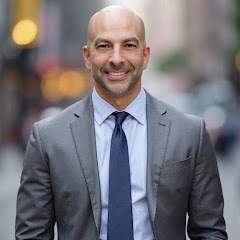
 Peter Attia MD
403 ‒ Peptides: separating scientific promise from marketing hype
Peter Attia MD
Why peptides need a framework 0:00
Peter Attia reintroduces the topic of peptides, noting the field sits between real science and heavy commercialization, with hope often turned into a marketable product. He argues that asking whether peptides work is the wrong question, similar to asking whether all drugs or all surgery work. A peptide is simply a short chain of amino acids, and the word says nothing about safety or effectiveness. Some peptides, like insulin and GLP-1 agonists, are among the most important drugs ever made, while others have no credible evidence behind them, so each one must be judged individually.
Five questions to evaluate any peptide 4:31
Attia lays out five questions that apply to any drug, not just peptides. First, is there a viable mechanism of action, since only about 3 percent of FDA-approved drugs have genuinely unclear mechanisms. Second, is there evidence of meaningful benefit in humans, given that 30 to 50 percent of drugs that pass preclinical testing still fail in phase one trials. Third, do we understand safety, dosing, and pharmacokinetics, including how much reaches circulation and what risks need monitoring. Fourth, does the likely benefit justify the risk for this specific person, since risk tolerance depends on context. Fifth, is there a better characterized way to get the same result, which forces you to ask what you actually gain by choosing a less studied option.
Three buckets of evidence 8:31
Attia sorts peptides into three buckets. Bucket one is scientifically unsupported, with no validated mechanism and little credible human evidence, where claims tend to drift over time. Bucket two is biologically plausible but lacks human clinical evidence of benefit, often because development stalled or the drug was outcompeted. Bucket three contains scientifically legitimate molecules with the strongest footing, but he stresses that evidence is tied to a specific dose, population, and indication, so being in this bucket is not a blanket endorsement, especially for gray market products.
BPC-157 as a case study 12:31
Attia runs BPC-157 through the framework and finds it fails every question. Its origin as a fragment of a gastric protection compound is murky, the discoverer has refused to publish the full parent protein sequence or disclose the screening method, and no receptor or target has been established. More than 80 percent of the published research comes from one academic group with commercial ties, and despite roughly three decades of claims there are no published human randomized trials showing it accelerates healing. Dosing and pharmacokinetics in humans are unknown, and the proposed mechanisms involving VEGF and nitric oxide could plausibly promote tumor growth, making the risk-benefit trade-off poor. He places BPC-157 firmly in bucket one and notes that its claimed uses have expanded over decades without any single claim ever being rigorously proven, the opposite pattern from legitimate drug development like that of GLP-1 agonists.
CJC-1295 and the limits of biological activity 22:01
Attia turns to CJC-1295 as an example of a peptide that is biologically plausible and active, since it can raise growth hormone and IGF-1, yet that alone does not prove clinical benefit. He points out that direct growth hormone administration already shows only modest changes in body composition, much of it water retention rather than muscle, with little effect on strength or functional performance in growth hormone replete adults. Since pushing the pathway directly has largely failed to produce meaningful benefits, he says the burden of proof is high for an indirect stimulator like CJC-1295 to do better.
Why testimonials mislead 26:02
Attia addresses the common claim that peptides worked for someone, explaining that testimonials only show what happened after a drug was taken, not what would have happened without it. Musculoskeletal injuries naturally fluctuate and improve, so people often start a peptide at their worst point, a pattern known as regression to the mean. He describes a friend who credited dramatic before and after photos to a peptide stack, only for it to turn out the person was also exercising, taking tirzepatide, changing diet, and using testosterone. He also raises the placebo effect, reporting bias, and the absence of blinded controlled comparisons as reasons anecdotes cannot establish effect size, proper dosing, or harms.
Why randomized trials matter 31:01
When someone believes a compound is working, that belief can produce a real effect on its own, so randomized controlled trials exist to answer the attribution question, how much of an improvement belongs to the molecule itself rather than to story, ritual, attention, or expectation. The semaglutide STEP 1 trial shows this clearly, since the placebo group, who believed they might be getting a weight loss drug, still lost weight, even though the drug produced far more loss than placebo. For peptides like BPC-157, this kind of controlled human evidence separating the molecule from the mythology is largely missing, which makes anecdotes easy to over-interpret.
What FDA approval actually buys you 33:00
The real question is not whether you love or hate the FDA, but what information you gain or lose by choosing an approved drug over one that hasn't completed formal development. Approval means a drug has shown a defined benefit in a defined population, with a studied dose, formulation, safety profile, and manufacturing standards for identity, purity, and consistency. Approval is also indication specific, illustrated by SS-31, which may be reasonable for the severe disease Barth syndrome but lacks the evidence to justify use by a healthy person seeking energy or longevity. A prescription, a compounding pharmacy, or third-party testing can reduce some risks but cannot supply the missing clinical evidence, manufacturing controls, or monitoring.
The molecule is not the drug 39:00
A pharmaceutical is more than an amino acid sequence, since turning a molecule like retatrutide into a reproducible product requires solving manufacturing and purity problems that have nothing to do with receptor binding, so two vials claiming the same sequence may not be equivalent. Natural peptides can still be patented through modified analogs, salts, or delivery systems, as with rapamycin, metformin, statins, and even BPC-157, so the lack of pharmaceutical development for a peptide is telling rather than proof of a conspiracy. Many wellness peptides, like CJC-1295, were actually abandoned pharmaceutical candidates, while a closely related molecule, tesamorelin, succeeded and gained approval because its data were better.
Where real promise lies 44:32
Peptide science itself is legitimate, with roughly 100 approved peptide drugs, about 150 in trials, and 600 to 700 in preclinical development, and the strongest near-term promise lies in metabolism, infectious disease, diagnostics, and cancer. The wellness claims around brain boosting, recovery, and tissue repair face the steepest scientific hurdles, partly because the blood-brain barrier limits central nervous system effects. A useful test for any peptide claim is whether it could ever be proven wrong, and a field where claims keep expanding rather than narrowing over time is moving in the wrong direction, since roughly 90 to 95 percent of drugs entering trials fail, and that built-in failure is part of a working system rather than evidence against it.
AI-generated summary. It can be wrong or incomplete - check anything that matters against the original.
